
Hello.
My name is Robin, and this is my website about computer games. Here you can find essays about old games, industry commentary, free games I've made for fun, and funny songs.
I don’t want to make a habit out of making fun of people on this site, but this week Microsoft’s Aaron Greenberg (who we saw defending the insane pricing of the Xbox 360 HDD a while back), is coming out with stuff that’s too good to ignore:
“I think that there’s a difference in the type of customer that is buying the Wii. When you think about it, there’s a difference between trying to be the number one console with nine year old gamers, and being the console that offers the most experiences from 13 to 33…
You see they’re not buying games on it, right? They’re buying it, it’s like something they break out when people come over, and it’s maybe a fun thing, but it’s almost like the same people that buy a karaoke machine, you know? They’re not really buying it for games, they’re just buying it as a novelty.”
In other words: “Nintendo is for kids! Local multiplayer games are not real games! Fun is sooo immature!” Embarrassing, playground-level arguments, and particularly poorly timed considering that Super Smash Brothers Brawl currently sits at the top of the all-formats European chart, hot on the heels of the mega-success of Wii Fit and Mario Kart Wii.
It will be interesting to see whether Nintendo make public any of the data from their Nintendo Channel survey system, because I’d be willing to bet that the majority of people buying Brawl aren’t “nine-year-olds”, they’re the same audience that bought into the previous installments of the series, and who overlap heavily with the crowd who bought GoldenEye 007, Halo and Grand Theft Auto IV. The audience we’re led to believe is in thrall of the Xbox 360.
To be fair to Greenberg, while at this point it’s clear that the Wii isn’t a fad or a novelty, it still remains to be seen whether the Wii userbase will maintain or increase the rate at which they buy games for the system. Having said that, it’s far from established that the Xbox 360 is driving huge software sales either. Take the PS3 and PC sales of recent blockbuster titles out of the equation, and zoom out from North America, and the story looks very different.
It appears that this isn’t the first time that Greenberg has gotten a little emotive and vented his frustration. (I’d quote from that but virtually every sentence is FUD. Rounding on the PS3 because not every game is 1080p? Please.)
Peter Moore had the right idea (your correspondent double-takes and peers at his drink suspiciously): if an interviewer asks you a tough question about a competitor, offer them guarded praise (“God bless ’em”) and try to steer the conversation to safer ground. Don’t blurt out a load of FUD that flies in the face of the sales figures. The days of consumers buying into one games platform and shunning all others are over. You can focus on bringing something positive to that mix or you can alienate your customers. Your choice.
Tags: aaron greenberg, commentary, FUD, microsoft, nintendo, wii, xbox 360
 Man, I totally did not get on with these stupid things at all.
Pixelblocks are like a bunch of tiny one-stud legos that you can link together to make mosaics and shit. They say on the box that they’re a construction toy – yeah, like the Nintendo Wii is a games console (AMIRITE?). You can’t make the kind of cool spaceships and robots and stuff you can with legos, instead the point is that they let you recreate characters out of games. They don’t say this on the box anywhere because I guess that wouldn’t look very educational, and these things cost serious buck$$$ so they probably want to sell them to parents as well as developers and dorks.
I ordered the largest set they make (please note I did not go into a toy shop to buy these, toy shops are totally for babies), which includes 2000 pieces. Initially my plan was to build a Locust Abdominator, a new boss enemy from Gears of War 2 which rips out people’s ribcages with a giant vending machine claw. However with a bit of preliminary mental math I figured out that I had barely enough pieces to render one of the creature’s groinspikes. Jeez!

I was going to send a wicked harsh email to Pixelblocks LLC, but then some of the guys here explained that the idea was to make sprites from old retro games, from the caveman days before normal mapping and petulant occlusion stencils. I dimly remembered that Epic had done some 2D games before Unreal, Jazz Jackrabbit and Jill of the Jungle or something, but when I brought this up with the guys they pretended not to hear me. So all I could think of to do was Mario or Zelda or some other kiddy Nintendo shit.
All the technical brainsteins in the audience will have probably figured out that 2000 pieces does not exactly equate to true HD resolutions. It is in fact 0.002 megapixels, which is even worse than an iPhone camera I think. The colour depth is kind of limited as well – it could be charitably described as 12-bit colour I guess because you get bits in twelve different colours.
But what really blows is the fill rate. We are talking minutes per line here people. An Etch-a-Sketch could run rings around these things. I don’t see how anyone could do anything useful with this system ever.
I can’t help but think that I could have better spent the two hours that it took me to build Mario flipping the bird. I could have been designing an even gnarlier set of out-sized armoured shoulder pads for one of our ethnic stereotype space marines.
I wouldn’t recommend these at all as they’re totally not moving with the times. Next time I want something to decorate my cubicle I will follow the art department’s advice and buy a bunch of figurines from Spawn.com. I hear that they are coming out with a series of ‘dark’ reimaginings of Hanna Barbera characters this year. Their diorama of zombie Snagglepuss disemboweling Huckleberry Hound in fetish gear would look totally sweet on the shelf above my desk. Totally. Sweet.
Peace out dudes!
– DeThSkEwEr –
Erm, yes. Pixelblocks are quite a fun and versatile toy, but there’s a grain of truth in Brad’s criticism of how long it takes to build things with them. They are also rather expensive, although random tat emporia like TK Maxx sometimes have them on special offer. On the positive side, the end results look very impressive even without special lighting or presentation, and unlike mosaic beads they’re endlessly reconfigurable if you get bored of your current creations.
Flickr documents some of the slightly more imaginative uses they’ve been put to, such as both Sam and Max, various other characters, and this ridiculous effort (along with endless versions of Mario, Link and Megaman, of course).
I suppose they’re also quite a good tool for teaching the challenge of maximising what you can achieve with limited resources, although thankfully game developers typically don’t have a limited quota of black and white pixels at their disposal. Maybe that’s an opportunity for micropayments that EA should look into.
Tags: pixelblocks
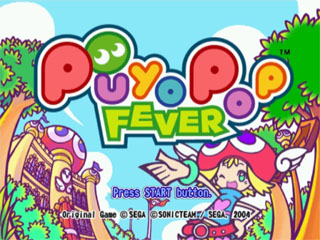
This piece was originally published here in April 2004. Puyo Puyo is my favourite of the many falling-block puzzle variants. Puyo Puyo 2 on the Mega Drive (now available on the Wii Virtual Console) is probably the version that best balances presentation and functionality, but Fever is a respectable entry to the series, and it was ported to a staggering number of platforms. (It’s really, really bloody twee though.)
Tags: Game, game title, lookback, multiplatform, puyo pop fever, puyo puyo, sega
I should forewarn you that this post is going to contain marketing speak, and stuff that is probably only of interest to people who follow the business side of mobile games. I’ll get back to talking about less deathly dull subjects in the next update.
On mobile games industry news sites (like Pocket Gamer and Mobile Entertainment), I’ve seen a steady trickle of positive news stories about a company called Greystripe. Greystripe’s business model is to license mobile games from publishers and ‘wrap’ them with dynamically updated advertising. Users can then download the games for free from Greystripe’s GameJump website (and elsewhere), and are shown some full-screen ads each time they enter or exit the game.
On the face of it, this sounds like a system that’s beneficial for all parties: customers get free games, publishers get a steady revenue stream, and advertisers get good data on how many people are seeing their ads. Certainly, the magic words “mobile advertising” (currently as effective for hooking venture capitalists as “mobile search”, “mobile video” and “free birdseed” have been in the recent past) have ensured that GreyStripe’s coffers have been generously filled by investors.
However, there are significant issues with such a model of which mobile games publishers should be wary. (Please note that I’m referring to ad-funded games in general here rather than singling out Greystripe specifically. There are other companies trying similar models which may also be affected these problems.)
Tags: boring, gamejump, greystripe, marketing, mobile games
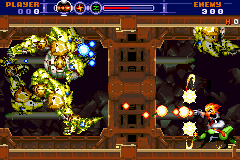
Continuing the trawl through my old games writing, here’s a look at Treasure’s 2005 remake of their breakthrough hit Gunstar Heroes. My opinion of the game hasn’t really changed, it’s a technically strong but otherwise unremarkable romp. At the time of course we didn’t realise that Gunstar and games like it would represent the peak of Game Boy Advance development (the official line from Nintendo was that the DS was going to be a “third pillar”, before its massive success effectively made the GBA obsolete).
I remember being terribly annoyed by John Walker’s 5/10 review of the game for Eurogamer at the time. It’s still an unfair review (the “less than one hour long” criticism is meaningless – the original game was of similar length, and many other console action games follow the arcade model of offering infinite replayability rather than hundreds of similar levels), but Treasure’s later efforts have been received more favourably.
The following piece was originally published here in December 2005.
Tags: Game, game title, gba, gunstar future heroes, gunstar heroes, gunstar super heroes, lookback, sega, sega mega drive, treasure
I’ve read a number of interesting articles recently, some of which cover topics which I was going to explore in more depth, effectively saving me the effort.
First up, Tadhg Kelly reacts to the news from Microsoft that the Xbox Live Arcade service is to start de-listing games based on low review scores and conversion rates. I agree that this is an idiotic decision, which fails to address problems built into the system’s interface and which could over time lead to a ‘brain drain’ as publishers focus their efforts on increasingly attractive channels elsewhere (WiiWare, PSN, Steam, Gametap, etc.).
GI.biz’s Rob Fahey writes about Nintendo Europe’s continual stock shortages. I moaned about Mario Kart Wii being out of stock everywhere the other week – now it appears that Wii Fit has bombed out of the charts simply because NoE can’t get enough stock.
Fahey cites previous products which have run afoul of these issues, including Wii Play (which disappeared for months, only to return a few months ago in massive quantities, which retailers were able to sell at a premium, in the light of the ridiculous prices the game/controller bundle had commanded on eBay in the interim), as well as the Wii console itself. I’d add Gamecube Resident Evil 4 to that list (which Nintendo published in Europe, and underestimated demand for by a vast margin). If Nintendo even tried to take Europe seriously, heads would have rolled a long time ago at NoE.
By way of balance, here’s a rather long and self-congratulatory article by Sean Malstrom which draws a distinction between Nintendo’s strategy under Iwata and what the wider industry has labelled ‘casual games’ – it’s not about dumbing down, but rather carefully encouraging consumers to try more complex things. The excessive length aside, Malstrom makes a convincing argument, and I would hope to see more third parties take these views on board when planning future Wii releases.
The most interesting place to be right now is in games that offer an extra layer of depth and engagement, to give the players who bought Wii Sports, Wii Play (and in many cases Mario & Sonic at the Olympic Games) a bunk up to the next tier. (The phenomenon of games being needlessly cut down and simplified could be applied to LostWinds, but it’s by no means the worst offender.)
Finally, something from the obscenely talented and witty Ben ‘Yahtzee’ Croshaw about gaming webcomics (which I’m jiggered if I can find a way to link to directly, but this should find it – UPDATE: Yahtzee has now filmed this for ZP – it’s utterly glorious). I’ve avoided talking about or even linking to any gaming webcomics on this site because they all fail as comics and have nothing to do with games. I genuinely believe that they’re making games worse by spoon-feeding dubious opinions to thousands of impressionable kids who don’t have the attention spans to read something without pictures, gratuitous uses of the word ‘fuck’ and constant pandering to a sense of fraternity with their fellow ‘gamers’. Ctrl+Alt+Del is by far the worst offender on all counts.
(And really finally, Bill Harris’s Friday Links serves up another bumper helping of fascinating “Believe it or Not!”-esque content sent in by readers. A regular feature that I heartily endorse subscribing to.)
Tags: link dump

The Neo Geo Pocket Color (NGPC to it’s friends) was SNK’s attempt to revitalise the handheld market in the early 1990s, having recognised that Nintendo’s decade-long dominance of the sector had led to stagnation, and that there was an untapped audience for a more technically advanced system with games that appealed to players who wanted something more than just Pokemon and bad movie licenses. You could (if so inclined) draw parallels between the machine’s short but creatively fertile life and that of the Sega Dreamcast.
Often erroneously described as having been a commercial failure (or having been beaten in the marketplace by Nintendo), the NGPC was in actuality a modest success, thanks to the low price of the hardware, strong marketing and the availability of some recognised franchises (such as Pac-Man, Sonic and Puzzle Bobble). Unfortunately this was too little, too late for SNK.
SNK’s collapse was brought about by serious company-wide issues. The closure of the NGPC business was a result of these issues rather than a significant contributor towards them.
The years that followed the death of the NGPC have seen extremely rapid technological advance in the handheld market (driven by the mass-market adoption of mobile phones) and huge success for new generations of handheld consoles (the Game Boy Advance, Nintendo DS and to a lesser extent the PSP). As a result, NGPC games look and sound a little shabby these days, but the ingenuity, attention to detail and responsive controls that were their hallmarks can still be appreciated.
The machine’s best games included Card Fighters Clash, SNK vs. Capcom The Match of the Millennium, Faselei!, Neo Turf Masters and Sonic Pocket Adventure, all of which are well worth playing (and worth my covering in more detail in future updates). However, the first game I’m going to look at was a lot stranger than any of those. Ganbare Neo Poke-Kun was a virtual pet game and minigame collection that prefigured the WarioWare games, and invites the player to re-examine their definition of what constitutes a ‘game’.
(The following was originally published in March 2003)
Tags: Game, game title, ganbare neo-poke kun, lookback, minigames, neo geo pocket colour, ngpc, virtual pet
WiiWare finally launched earlier this week. Good news for me, as I’d been looking for something to buy with the Wii Points I’d been sent by Nintendo Europe by way of apology after they accidentally offered the “Star Points to Wii Points” service before it was meant to go live. (It turns out they were offering a fair exchange rate and allowing people to buy enough points at a time to actually buy games with – luckily they closed the loophole before it could tarnish their image as lovable bumbling incompetents. If anyone from Nintendo Europe is reading this, would you kindly go and order more stock of Mario Kart Wii? All the other publishers seem able to keep popular games on UK retail shelves for more than five minutes.)
Back to the point.
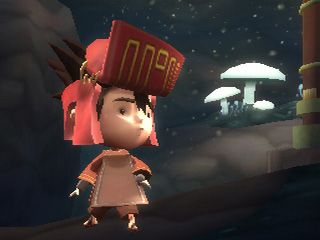
As you’ll have gathered, the game I plumped for was Frontier Developments’ LostWinds, a platform adventure designed around the Wii Remote’s cursor control. As every review and preview of the game has already mentioned, it’s immediately apparent that Frontier haven’t skimped on the presentation compared to a full-price release. The game’s visuals are pleasingly rich and detailed, with most things on screen reacting in some way to the wind generated by the movement of the cursor.
Tags: frontier, Game, game title, lostwinds, nintendo, poodles, wii, wiiware
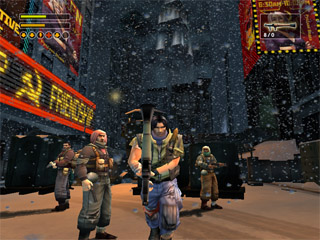
Freedom Fighters is one of the hidden gems of the last generation, and is a textbook example of why publishers are often wary of releasing games based on original IP. It reviewed well, has a good pedigree, an interesting premise yet still (unless I’m mistaken) bombed at retail.
It is a game that sets out to delivery one narrowly-defined premise exceptionally well. Driving the invading forces back, street by street, is immensely satisfying. The squad mechanic works properly and isn’t just for show (while many games since have featured AI controlled squadmates, only a few have made such a system integral to the gameplay). The save system fits the structure of the game perfectly. Even the way shooting while running is handled (mixing autoaim with significantly reduced accuracy) feels right.
Unfortunately time hasn’t been kind to the game. The presentation was already somewhat threadbare at the time of release, and looks positively archaic today. Kane and Lynch (from the same team) was widely expected to be a glossy update of the Freedom Fighters formula, but for one reason or another didn’t live up to expectations. A proper sequel is long overdue.
(The following was originally published here in February 2004)
Tags: freedom fighters, Game, game title, io interactive, kane and lynch, lookback, multiplatform, squad

On Saturday I attended the GameCamp 08 event organised by The Guardian. This was a meeting of a couple of hundred people with an interest and ideas about games of all kinds, modeled after the BarCamp series of gatherings, or in my frame of reference, like a larger-scale, greatly more informal and parallelised version of Dorkbot.
Being over-tired and under-prepared, I gravitated towards presentations by people I’d heard of for the most part, and away from things to do with table-top gaming and ARGs. (I’m not convinced that ARGs – essentially very weakly interactive marketing tools – have any place in an event about games, but as the day had been partly organised by an ARG company, there they were.) With talks going on in seven rooms at once, it was impossible to see everything, but I regret that I didn’t see some of the more esoteric talks (the controller hacking sounded intriguing) or anything focussed on MMOs.
I had originally planned to give a little post-mortem talk about what I’ve been doing in the mobile games sector for the past couple of years. The theme and message was that the mobile games industry had become preoccupied with fighting the ‘symptoms’ (complaining about device fragmentation, fiddly controls, failure to address the casual audience, etc.) rather than tackling the underlying ‘disease’ (the fact that mobile games companies do vastly less to gain the trust and participation of their audience than their counterparts on any other format, when the nature of the platform and distribution method demands that they do much more). But it quickly became apparent that what I’d prepared would perhaps be a bit too specialised for the general audience.
Oh alright, I bottled it.
Highlights of the day for me included Ste Curran’s talk on games as a facilitator for shared experiences (which makes it sound a lot dryer than the set of funny and engaging vignettes it actually was), the afternoon’s rather freeform chat touching on Flash development, Ukranians, Peter Molyneux and Twitter, and the closing meeting of the ‘People’s Revolutionary Committee’ where many gaming bugbears (including console exclusives, tutorial levels, and Twitter, again) were condemned to death by firing squad.
All in all, it was a great opportunity to meet some very bright and games-obsessed people, and I hope we don’t have to wait a year for the next one.
In a break from our usual programming, I made a game:
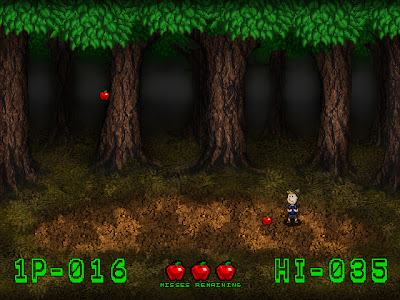
“Scrumper is a game that allows the player to engage in the ‘victimless’ crime of apple theft from the comfort of their own home. The object of the game is to catch as many falling apples as possible.”
It has already received glowing testimonials from beta testers:
“it actually seems fun now”
“are you sure it’s not virus?”
You can download the game from here and further explanation is here.
Tags: arcade, free games, Game, games, games i've done, indie, Killing me won't bring back your apples!, PC, pygame, python, retro, scrumper

Judging by the traffic and feedback that I got from the earlier Games for Windows 2000 article (where I collected together workarounds that had been found to allow various supposed “Windows XP only” games to run on Windows 2000) it would seem that there’s still a small but dedicated userbase for this venerable OS among PC gamers.
In the intervening months, two industrious Windows 2000 stalwarts going by the handles of OldBoy2k and OldCigarette have taken up the gauntlet to fix every artificially incompatible game. The results of their efforts so far are catalogued on their Windows 2000 Gaming forum.
Most intriguingly, OldCigarette has developed a collection of API wrappers which goes some way to providing a general purpose solution for current and future games afflicted with these problems. In theory, the Windows 2000-using gamer need no longer rely on the good grace of the community to develop a workaround for a specific game – with this toolkit all they have to do is note the error messages produced when they try to run the game and simply drop relevant DLLs into the game’s working directory.
(There’s slightly more mucking about than that required initially – copying some files, a registry tweak and a reboot – but once it’s set up once configuration for subsequent games is minimal.)
I’ve so far successfully employed this box of tricks to play Stranglehold. Next on the list is Company of Heroes: Opposing Fronts, assuming I can circumvent the utterly deranged battery of booby traps that Relic are passing off as an installer program. But rare exceptions aside, I certainly have more confidence in buying Games for Windows (XP/Vista only) branded games now that I know that I can run them. Take that, inevitably rising tide of progress!
Tags: commentary, company of heroes, stranglehold, windows 2000, windows xp, wrapper

In the last couple of years, the line between PC and console gaming has been (in some respects) almost completely erased. The simultaneous release of high profile titles on PC, Xbox 360 and PS3 is becoming the norm. It’s easy to forget that before the mid-1990s, computer and console gaming were completely different worlds – two hobbies running in parallel with very little crossover between them.
While console gamers gawped at Starfox, PC gamers chuckled to themselves and went back to X-Wing. We’d … seen things you people wouldn’t believe. Of course then the Playstation came along and all the fascinating things people had been doing under DOS got swept aside, but for a few short years PC gamers had a legitimate reason to be smug.
Today, the vast majority of development projects are railroaded into long-established genres, known quantities where schedules and budgets can be (usually over-optimistically) drawn up at the outset. Back in the early 1990s, developers and publishers seemed to have no such play book to work from, resulting in a raft of games that were staggeringly ambitious and seemed to have no obvious precedents – games which would be almost inconceivable as commercial ventures today.
Some such games caught the gaming public’s imagination, allowing their creators (such as Sensible, Origin, Bullfrog, or the Bitmap Brothers) to found dynasties and ensuring their games are still widely remembered. Other games (such as Alone in the Dark) didn’t stay the course, but inspired later, more mainstream games (Resident Evil) to secure their place in history as a footnote.
There were still other, equally fascinating games that haven’t survived into posterity.
One such game was Stunt Island, developed by The Assembly Line and published by Disney Software for the PC in 1992. Stunt Island was a game that had the odds for historical recognition stacked against it from the outset. It shipped on six floppies bundled with a 180-page manual and a poster map, pushing its retail price towards £49.99, not a reasonable price for any game, then or now. As far as I’m aware it never saw a budget or CD-ROM re-release, and its status as Disney’s intellectual property has frozen any chances of reviving the franchise stiffer than Walt himself.
Tags: DOS, Game, game title, Machinima, PC, PC Gaming, Stunt Island
Earlier this month, Lindesay Irvine made a post on the Guardian’s books blog bemoaning the news that thriller writer James Patterson was collaborating with Oberon Media on a casual game.
Irvine’s confusion and apprehension at this specific instance of a writer crossing over into a new medium (he seemed, perhaps understandably, to be unaware of the casual PC games market that has been courting Patterson’s middle-aged female demographic for the past few years) quickly segued into a highly defensive rubbishing of games as a whole. He scoffingly suggests games we can expect from other literary figures, including a “Martin Amis first-person shooter”. (Presumably Irvine is unaware that Amis wrote a book on video games over 25 years ago.)
Setting aside the ill-informed bluster, the kernel of Irvine’s argument is mixing imaginative writing with any other form of media serves to dilute it. I have to admit that the bulk of the evidence is on his side. What works on the page may not transfer to the stage, screen, or even audio recording successfully without major rework acknowledging the conventions of the medium. It’s easy to see why someone who has a narrow and outmoded view of games would have difficulty believing that anything of worth could be carried over.
Alastair Harper promptly penned a response which tried to set Irvine straight and make a case for increased involvement of established writers in games. He made the insightful point that storytelling in games allows things that wouldn’t be possible in other media (giving Bioshock’s big reveal as an example). He waxed lyrical about point and click adventures but didn’t touch on the interactive fiction genre, which would have furnished still more examples (from Floyd’s death onward).
Tags: alastair harper, bioshock, commentary, games, lindesay irvine, martin amis, oblivion, writing
I played through the single player campaign of Call of Duty 4 a few weeks ago. I’m not sure what I can add to that statement, as judging by the sales figures, most of you will have also played it and formed your own opinions already. Shifting over seven million copies in a few short weeks is nothing short of phenomenal, and the game will surely add a couple of million more to that total in budget and Game of the Year re-release incarnations.
Activision and Infinity Ward judged the market perfectly, managing to recapture the ‘extended audience’ that turned the Deer Hunter franchise into a $100m industry at the turn of the century. Which isn’t to say that the game is aimed squarely at jingoistic Americans, it’s just very idiot-inclusive in its design. It’s the gaming equivalent of a Summer blockbuster movie, and guaranteed to spawn many imitators.
The game is the latest in a long lineage of sanitised Hollywood-indebted war games, harking back to Combat, Ikari Warriors, Operation Wolf and Desert Strike more than its more immediate predecessors (the Medal of Honor, Brothers in Arms, and Call of Duty series et al, with their Band of Brothers/Saving Private Ryan inspired aspirations to historical reverence), and a million miles from the scant few attempts to portray the ugly realities of war such as Operation Flashpoint, Hidden and Dangerous and (oh, alright then) Cannon Fodder.
Tags: Activision, Call of Duty 4, FPS, Game, game title, Infinity Ward, Ka-boom, multiplatform, PC
