
Hello.
My name is Robin, and this is my website about computer games. Here you can find essays about old games, industry commentary, free games I've made for fun, and funny songs.
My most recent contribution to the Maraoke video game karaoke songlist – first performed 20/05/2023 by Grey.
The first Maraoke song about Marvel Snap. Also one of the hardest songs to perform on the system – good luck if you pick it. (It’s tracked to the 2023 ‘Rock’ remix of the song to make it even more challenging.)
“Marvel Snap”
– after “Heart Attack” by Demi Lovato
Put in my defensive buff
And I’m about to call your bluff
If I went and did that,
I think I’d win at Marvel Snaaaa…
Never put my cards on Jotunheim
Room in my deck for a Strong Guy
Jubilee triggers summoning Ultron
And now I don’t have anywhere to play my Wong
Your Hobgoblin
He can drain me like a Game Boy
But I’ll still win
Just watch me pounce with my Hank McCoy
But you make me gotta have one more turn
I’m this way with CCGs
It’s true, game is so moreish
That I just can’t play one hand
You play Cosmo
But I follow up with Magneto
So I put down a defensive buff
Think I’m not gonna call your bluff?
Then I went and did that,
I’m beating you at Marvel Snap
I’m beating you at Marvel Snap
I’m beating you at Marvel Snap
Played Professor X on the other side
When he turns around you get paralysed
And every time you play that Fuzzy Elf
My Killmonger puts him on the shelf
It’s just not fair
When your Juggernaut does his work
My cards are rare
But steer my deck like a total berk*
But you make me go and snap on my turn
Then get played by Doctor Doom
Four cubes, wasted on purpose
And I just can’t understand
You send me Rogue
Stole the power off Devil Dino
So I put down a defensive buff
And you know I won’t call your bluff
Then I went and did that,
I’m beating you at Marvel Snap
I’m beating you at Marvel Snap
I’m beating you at Marvel Snap
I’m failing these cards are all wrong
Was it Agatha all along?
(Agatha all along?)
Let an A.I. lose the game
(A.I. lose the game)
So scared that turn six is a bust
I finally draw Galactus
And I burnt both your lanes
It’s by Ben Brode
Bunch of other folks who made Hearthstone
So they’re called something like Second Lunch(?)
They’re coming out of years of crunch**
Take the industry back
They made a game called Marvel Snap
They made a game called Marvel Snap
(Marvel Snap)
…made a game called Marvel Snap, Snap
They made a game called Marvel Snap
(Oh, I’d play a game of Marvel Snap)
A little game called Marvel Snap
* Or ‘jerk’ if you’re American, I suppose.
** Who can say if this is an accurate portrayal of the working environment at Second Dinner, however it does rhyme with ‘lunch’.
Tags: ben brode, blizzard, ccg, cold open, demi lovato, disney, heart attack, hearthstone, karaoke, maraoke, marvel, marvel snap, mobile games, second dinner, silly songs

My most recent contribution to the Maraoke video game karaoke songlist – first performed 18/03/2023 by myself and Lupine. (Thanks to Lupine for transcribing and adding images to the version on the Maraoke system.)
This is a song about the infamous 1980s home micro game The Great Giana Sisters. Please note that some dramatic license has been taken – as far as I’m aware, the developers of the game never actually went to court or got sued by Nintendo, and withdrew the game from sale before things could escalate to that level.
“The Great Giana Sisters”
– after “Lady Marmalade” by Bob Crewe and Kenny Nolan and popularised by Christina Aguilera, Lil’ Kim, Mya & P!nk
Where’s all my clone sisters?
Don’t pick up that phone, sisters
(Hey sister, cloned sister,
phoned sister, owned sister)
Uh
(Hey sister, cloned sister,
phoned sister, owned sister)
He played Gi-a-na on the old Commodore
Borrowing someone’s IP
He said, hello, hell no,
I represent Nintendo-oh
Bitchy bitchy ‘tendo lawyers
(hey, hey, hey)
Gitcha with that C & D (yeah)
Knockoff of your plumber brothers
(ooh, yeah)
Miyamoto‘s marked ya card
Oh, woah
You assumed we gave you
carte blanche, but nah
You knew who those
trademarks were? Ours
(Yeah, yeah, yeah, yeah)
He sat in the courtroom
as they’re fessing up
Pressed them for an extortionate fine
Oh verdict’s bleak,
we could make minor tweaks? Yeah?
Bitchy bitchy ‘tendo lawyers
(da-da-da)
Gitcha with that C & D
(ooh, yeah, yeah)
Copycatters play with fire
(yeah, yeah)
We could call it an homage, uh
You assumed we gave you
carte blanche, but nah
You knew who those
trademarks were? Ours
Yeah, yeah, uh
Coming through from Germany
cuz we’re Rainbow Arts
Let ’em know about our fake
unlicensed remake (uh)
We’re ignorant of
intellectual property laws
I’m saying why make mine,
when I can clone yours?
(When I can clone yours?)
Disagree? Well that’s fair
and we’re sorry
Gotta bury these unsold games
like Atari (like Atari)
Swap girls for dudes,
swap sweeties for shrooms
Big N got wind now our game is doomed
Hey sisters, soul sisters,
…bit like Mario, sisters?
To save time and cover our own ass
We’ll erase,
avoiding an expensive case
If you’re a snitchy, bitchy lawyer
(C’mon)
Fingering our collar (what?)
Sleazier than David Cage
One more time c’mon now
Giana (ooh)
Playing Giana (ooh, yeah)
Giana (o-o-oh, yeah)
Hey, hey, hey!
(Uh uh uh uh uh uh uh)
Just a reskin,
scrolling’s silky smooth
Isn’t as much fun to play (alright)
Made those European guys
learn ’bout copyright
Law (law), law (law), law
(uh uh uh uh uh uh uh)
Now they’re back home
ripping off R-Type
He’s coding new look-a-likes
But he just wanted to see,
Mario on C-sixty
-Four (four), four (four), four
Bitchy bitchy ‘tendo lawyers
(da-da, yeah)
Gitcha with that C & D (ooh) (oh lord)
Product recall for Giana (Oh oh oh oh)
They saw through your
camofla- (aa, aa, aa, yeah yeah) -ge
You assumed we gave you
carte blanche, but nah (but nah)
You knew who those trademarks were?
Ours (Plagiarism, yeah)
You assumed we gave you
carte blanche, but nah (but nah)
You knew who those trademarks were?
Ours (whoa-oh) (c’mon, uh)
Chris Huelsbeck (Ooh-ayayay-oh)
Manfred Trenz (Playing Giana)
Armin Gessert
(hey, hey, uh, uh, uh, uh, uh, uh, uh)
Miya (moto, oh oh)
Rainbow Arts, baby (baby)
Full on sued (ooh-oh, da-duh, da-duh)
Yamauchi here
Miyamoto rode ’em hard
Oooh, yes-ah!
Tags: 1987, armin gessert, chris huelsbeck, christina aguilera, clone, commodore 64, hiroshi yamauchi, karaoke, lady marmalade, lil' kim, manfred trenz, maraoke, missy elliot, moulin rouge, mya, nintendo, parody, pink, rainbow arts, retro, shigeru miyamoto, super mario bros., the great giana sisters, urban myths
Previously: 2018 – 2019 – 2020 – 2021
Once again the year draws to a close and it’s time to do my homework for the internet.
I realise I managed to avoid playing nearly all the big releases this year. This isn’t a boast. I’m not really a Dark Souls guy so didn’t bother with Elden Ring, and most of the medium-sized indie hits that came out this year I didn’t have the time or motivation to play, when weighed up against the gaming comfort food and new-to-me titles into which I ended up putting the most hours (below).
Yakuza: Like a Dragon / Like a Dragon 7
I spend a good few weeks this year exclusively playing Like a Dragon 7, a Playstation Plus freebie and my first experience of the franchise.
The game’s art direction (there’s a whole other essay in discussing how the Yakuza games find and celebrate beauty in the mundane) and execution of it’s story content is top notch. The story is driven along through frequent and lengthy cutscenes that mix together in-engine and prerendered scenes fairly seamlessly. While I’m sure I missed out on a lot of nuance by not having played all the previous installments of the series, the game spends lots of time fleshing out the main characters and explaining in broad strokes where people, places and events tie into the established story. It’s very funny as well, relentlessly undercutting itself and RPG conventions.
LaD 7 is designed to be an entry point for new players, introducing a new protagonist (Kasuga Ichiban) and turn-based JRPG style combat. Unfortunately it doesn’t feel quite as clean a break from established series conventions as Breath of the Wild did. There are lots of poorly integrated minigames dotted around the game world that mostly feel like they’re there out of obligation. While one or two feel like they have enough content to hold the player’s interest in their own right (such as the Dragon Kart racing game, the business management sim, and I suppose the emulated Sega coin-ops if you’ve not already played them to death), most are tucked out of the way and given such a needlessly cumbersome UI (the golf, baseball and UFO catcher games being particularly bad offenders) they almost feel like they’re discouraging the player from wasting too much time on them.
Aside from the minigames, the game itself is very obviously a patchwork of a few siloed-off systems (battle, world exploration, story) that rarely need to interact in a meaningful way. The game world is pretty enough to look at, but is pokey in open world game terms and lacking in interaction beyond random battles, shops and a very thin smattering of side missions. The game’s economy is a bit of a mess. You earn a trickle of currency from random battles and some moderately sized rewards from story and side missions, but the only practical way to afford the high end weapons and items in the game is to grind through a static battle arena that seems to have been stuffed with easy loot as a last minute kludge.
Aside from pivotal boss battles and a few ambushes from high level mobs to keep you from getting complacent, most of the combat can be steamrollered through without much strategic thought, in typical JRPG fashion. The game’s artists (and localisation staff) have had a lot of fun reskinning each of the game’s basic enemies (of which there are loads, even if they mostly boil down to different variants of ‘dude with specific melee weapon’) with progressively wackier themes, which the game explains away as Ichiban daydreaming about being a Dragon Quest hero whenever a fight kicks off.
Completing certain characters’ quests adds them as a contact in Ichiban’s phone, allowing them to be summoned in combat for a fee. At normal difficulty the game is balanced to make these gig economy summons rarely needed, but they’re worth using at least once as the elaborate cutscenes they trigger are in many cases hilarious.
The modest budget and creaky tech sometimes distracts. The main characters other than Ichiban tend to not change their appearance or costumes throughout the course of the game. Long exposition scenes sometimes take place in fairly generic rooms, suggesting a more ambitious or expensive scene was cut (the story arc involving the Korean mafia feels particularly short on on-screen action).
There’s an obvious difference between the appearance of characters modelled after their voice actors, and some of the later antagonists who have a much more stylised look – an intentional choice but one that looks much more incongruous given the game’s general level of fidelity than it presumably would have in the PS2 era. The animations whenever the script calls for a character to laugh are also very peculiar.
In spite of the series having now broken through in the West, it’s still fairly obvious that teenage Japanese boys are the primary audience. All that minigame content is geared towards players with vast amounts of free time to fill and a completionist streak. Women don’t factor into Ichiban’s world in a very significant way. More positively, the game does try to challenge lazy adolescent conservative attitudes, showing Ichiban the error of his boneheaded opinions, and accurately framing a cultish right wing protest group as cowardly misguided rubes.
My understanding is that the Like a Dragon games stories are intended to follow the conventions of pulpy yakuza genre films. With this in mind, the story works well (as should be expected given how many chances they’ve had to perfect the formula at this point).
There are a few unsatisfying bits. The melodramatic late-story revelation is a bit far fetched, but it’s kept ambiguous enough (hinted at through an unreliable narrator) that the story still resolves satisfactorily even if you don’t buy it.
Character motivations are monkeyed around with for story or gameplay convenience – most of Ichiban’s companions have reasons for joining (and sticking with) the party that really don’t bear a lot of scrutiny.
Midway through the story a minor character is murdered which turns out to be important to the overarching plot, but the level of determination Ichiban shows in avenging/investigating this murder seems wildly incongruous – this being a character who he has only recently met and who up until that point has been presented as not being very sympathetic or worthy of their loyalty at all.
In spite of all this, the opening and closing few hours are a tour de force of cinematic storytelling (by video game standards) and there are lots of high points in the intervening chapters as well. Like the best gangster flicks, Like a Dragon is a game that has something to say about the futility of the underworld lifestyle. It’s also a game where you fight a runaway chimp who has comandeered a JCB. Truly, something for everyone.
Slay the Spire
The problem with most deck building games is that they’re essentially a very convoluted way to play Hungry Hungry Hippos.
There’s an optimum strategy that players are required to gravitate towards. Individual playing style and improvisation are fed into the mincing machine to be replaced with card counting and spreadsheets. Board game nerds consider this to be a positive, a game requiring a ‘hobby grade’ time commitment to master being seen as a validation of their leisure choices. It’s this mentality that holds StS back in several regards.
The game’s onboarding doesn’t go nearly far enough to emphasise the importance of carefully limiting the size of your deck or seeking out duplicates of strong cards to further improve your odds of drawing them. While obviously a lot of the fun in the game is in building a mental model of the comparative values of cards and their synergies, one could end up struggling for a long time if they don’t realise the way that the game suggests playing it (with each new square landed on / battle won offering cards as a generally positive additive reward) isn’t the ‘correct’ way.
The game’s solution to extending it’s playing time and increasing variety is to have four characters, each with their own unique extra rules and unique cards. This is successful to an extent (and it is very cool that all the cards are compatible with all the characters), but by the time I’d unlocked the fourth character (having spent a lot of time playing the third one), I just didn’t want to scale the mountain yet again. I put the game aside for a few weeks, then sat down and consciously applied the rules in the previous paragraph with the third character and completed it on my first go. I’ve never felt compelled to go back since.
Finally, it’s safe to say that the game has been a significant commercial hit at this point. Why haven’t the developers ever gone back and fixed the frankly amateurish artwork? The card illustrations are for the most part passably good and readable, but the Spine animation of the battle scenes (as always) looks very ropey, and some of the event illustrations (the ‘campfire’ scenes in particular) are so crude you have to assume they’re placeholders that never got finished.
The fact that the deluxe physical edition of the game also uses some of this artwork suggests they’re scared of changing anything because the game has been successful. Please, don’t be so precious about it! You don’t need Valve/Blizzard-level production values, but if you want people to spend a large number of hours with your game at least you can make it pleasant to look at.
I played a ton of StS this year and enjoyed it a lot. I don’t want to sound like I’m diminishing it’s achievements – it’s a very well designed game. But at the end of the day, Slay the Spire, while powerfully addictive, doesn’t quite secure it’s place in the all-timer tier alongside Card Fighters Clash, Android: Netrunner and Marvel Snap.
Return to Monkey Island
It’s still too early for me to have any definitive opinion about Return to Monkey Island. I’ve played through the first two games several times over many, many years and thought about them a lot. (I last chewed over Monkey 2 when the Special Edition was released, which you can read here.)
It’s strange how something that’s seemed like an impossible pipe dream for so long feels like a bit of an anticlimax now it’s out. With the original cycle of SCUMM games in the 1990s, both the developers and players were stepping into the unknown. Monkey Island 2 and Indiana Jones and the Fate of Atlantis (and the later ones, with diminishing returns) were the state of the art for point and click adventure games at the time, as long and complex and visually cinematic as they could possibly be achieved with the technology available.
Return to Monkey Island is… another one, at approximately the same scale. Even if we accept that it was never going to do anything mindblowing (we’ve already seen cel-animated and 3D takes on Monkey Island, and point and click adventure games are still prohibitively expensive to make), it still feels a bit conservative: a handful of characters, a few dozen rooms, a few hours of gentle puzzles. There are no big changes to the formula, not a lot of character development – we’re firmly in the ‘weekly reset sitcom’ version of the Monkey Island world rather than the ‘real life if disappointing and messy, you naive idiot’ Monkey Island 2 version.
Coming from Ron Gilbert and most of the same team who made Thimbleweed Park, I was fairly confident that this was going to feel like a legitimate Monkey Island game. I didn’t expect it to carry on directly from the ending of Monkey Island 2 and convincingly segue from that into a new story.
For someone who played the original Monkey Island 2 on PC at release, the whole prologue sequence feels like an amazing magic trick. It feels like the part that Gilbert has been thinking about the longest. It provoked the same response as some of the stuff in Blade Runner 2049 (“Oh shit, they can do that? They can in fact do ANYTHING with these characters who have, for us, been trapped in amber for years? Because they invented them and know them?”) that Hampton Fancher had clearly been waiting to share for a looong while.
The writing, vocal performances, character design and of course the puzzles themselves stay commendably faithful to the earlier games. Rex Crowle’s art has about as much ‘information’ in a given scene as the VGA originals and isn’t distracting as some had feared. There are lots of little close up shots (at least, early on) that allow the characters to be more expressive.
Outside of the prologue, the chapter of the game where the action is confined to Le Chuck’s galleon feels the most fleshed out. Most of the game is structured in such a way that each main location is usually a self contained mini-episode of puzzles, without too much hopping back and forth until the final act.
Unfortunately not all of these sections come up to the same standard. Some have lots of elaborate backgrounds but a minimal amount of puzzling and character conversations. There are rather too many of those LucasArts ‘mazes’ built of mixing and matching background chunks (as in, more than one). There are cameos by series regulars (Stan, Herman, Carla, etc.) that go nowhere, and a cute subplot about scurvy (riffing on real world conspiracy chumps) that comes across as a faint imprint of a longer and funnier conversation that didn’t make it into the game.
I was a bit disappointed that Le Chuck was a non-threatening Saturday morning bumbler again rather than the being of pure malevolence he was in Monkey 2. I thought the ending was okay. It leaves the door open for anyone to make more Monkey Island games in future, but also works as a good coda if this really is the last one. (I was more annoyed about the last puzzle, which seems to go against all Gilbert’s complaints about bad puzzle design, as well as objectively having accessibility issues particularly if you were to try to solve it on the Switch’s screen.)
I hope this isn’t the last point and click adventure that this team makes, Monkey Island or otherwise – I kind of hope they’ll revisit the Thimbleweed Park characters one day. (The cool ones like Delores and Ransome anyway, not that hotel manager guy.)
Marvel Snap
See everything critical I said about deck building games in Slay the Spire above? None of that is true here.
Marvel Snap is one of the best new mobile games I’ve played in several years. It’s a competitive card battling game that has been streamlined (over a 4+ year development cycle) to the point of near-perfection. You and your opponent each have twelve cards and six turns to play them in three lanes. Most cards (and locations) introduce a new rule that either happens once or keeps happening each turn unless something else happens that removes it from play.
Infinite diversity in infinite combinations – as Mr. Spock used to say – is the key to why this works so well. There’s no perfect deck that can beat any strategy or the luck of the draw every time. Almost every time I play I’ll come up against a player who has figured out a new and unexpected synergy between certain cards, rewriting my mental model of their relative value again.
This is given a whole extra psychological dimension with the ‘snap’ mechanic – basically at any time, either player can hit a button to double the ‘XP’ stakes for the game, announcing they’re confident of their hand (or are bluffing). You start to be able to better predict what players are going to do from their early actions and frustrate them. I’m currently finding that the Beast card (particularly in concert with the Cloning Vats location) gives almost endless scope to be a dick, shifting the goalposts on which lanes my opponent needs to defend and cheekily neutralising lots of final turn ambushes.
I think I might have to concede that Card Fighters Clash has finally been bettered? Bearing in mind I’m currently addicted to this game, so that might be like proclaiming that cigarettes are inarguably great. (Maybe check back with me in a few months on this.)
Also, Disney/Marvel/Second Dinner if you’re reading this, I do hope (semi-seriously) that Biz Markie’s people are getting some appreciation for tens of millions of people hearing his catchphrase every day.
Cyberpunk 2077
Cyberpunk saw some major patches this year which further improved performance, fixed the driving and added a sprinking of new content (apartments to buy, a couple of new gigs and weapons, plus greatly improved options for customising your character’s appearance and outfits on the fly). Between this and the (surprisingly excellent) Edgerunners anime, I was tempted back to spend more time exploring Night City.
I wrote at length about the game when it came out, but in spite of it ticking so many of the boxes for my personal tastes in games, I was still somewhat hesitant to put it on too high a pedestal. At this point though, I think it’s fair to say that it’s one of my top ten games of all time. I think it’s probably time we bit the bullet and started calling it an immersive sim as well.
The many hours I’ve spent in the game this year haven’t been re-doing the main story and side missions. I’ve just loaded up my old all-missions-complete, meet-Hanako-at-Embers save and explored the city. There are no more mission markers on the map, but there’s still a lot left to see and do. The amount of secrets and tiny unique details hidden in the world continues to be completely astonishing.
CDPR’s level designers have taken snap-together architecture and props, and judiciously placed corpses with loot and written notes in their pockets, and used these as art materials to pile up seemingly thousands and thousands of micro-doses of worldbuilding. There are whole areas of the game (containing specifically crafted platforming, trap-avoiding and combat capsule challenges) that you might not stumble across until hundreds of hours into the game.
There is so much to find. The survivalist bunkers under buildings in the desert. The water purification plant on the river whose hacked security system has killed the engineers sent to investigate. The crime scene of a political assassination near the oil fields to the North where you can snag a sweet machine gun. The Easter Egg hunt for a unique weapon prototype in the Arasaka complex, seeded in an email on a laptop you could easily miss. Plus all those corpses halfway up fire escapes, stuffed in lockers, on rooftops, washed up on the beaches with their own little stories.
I think my favourite recent find was “Scraps”. A short way down the road from a mission location in the desert (a Wraith-occupied motel), there’s an unassuming junk yard of this name. It’s fully enclosed by razorwire fences, leading the player to an entryway that (if they’re observant) they’ll notice is strewn with corpses of attempted looters. You have to pick your way through a minefield and deactivate turrets, cameras and laser tripmines to get into the main building. Once you’re inside, you find a body face down on the floor in front of a number pad locked door. The game uses maybe five small epistolary texts (emails, a journal, etc.) to let the player piece together what happened.
There’s no achievement for doing this. It’s a quick twenty minute detour that feels like a one-shot short comic set in the world. The game is chock full of stuff like this, and it’s alarming to think that many players, trained on Ubisoft open world trash to make a beeline to the next mission marker until the credits roll, will have missed loads of it. It certainly proves that the established model of mainstream game reviewing (speeding through games before an embargo lifts), that led to some reviewers astonishingly complaining that Night City “felt empty”, is irrevocably broken at this point.
The upcoming Phantom Liberty expansion is one of my most anticipated games for 2023. Until then there’s always another storage locker to jimmy open, rooftop to scale, conversation to overhear, or unique clothing, weapon or vehicle variant to snag in Night City.
No Man’s Sky
Yes, I’m still playing it, but not anywhere as near as much as the last few years. NMS has reached the point where it’s starting to get very creaky on older systems (the most recent round of optimisation coinciding with the Switch release giving image quality a severe kicking), and after so many updates it’s difficult to keep track of what exactly was added to the game in the last 12 months. I think the freighter base overhaul, solar sail ships and pirate systems, and revamped, now at least somewhat challenging/interesting, sentinel combat were all this year, right?
Probably the biggest single improvement from my point of view was the new custom difficultly menu. Among lots of other options, you can now completely disable ship to ship combat which is a godsend. Dogfighting in NMS has always just been there because it was expected to be – it has no depth and no stakes (compared to Elite Dangerous for example where it’s an integral part of the game), and just ends up being a time-wasting annoyance when you’re trying to fly between planets.
There were also some good community expeditions (timed events) this year, although it’s getting to the point where the game chugs too much with real-time multiplayer enabled which spoils things a little bit. I won’t embed a selection of my screenshots this year, but you can find them all (assuming Twitter is still functional when you read this) here.
Everything else
I spent a pleasant few evenings playing Codies’ Dirt5. I enjoyed the casual, arcadey structure of the metagame. I was a bit less keen on how “how do you do, fellow kids?” the whole presentation was (I had to instantly mute the terrible ‘podcaster’ commentary that constantly burbles away) and the sporadic ‘novelty’ races with cars that handle like bricks. It was also amusing to see how the visual quality on console has gradually been whittled away (compared to the still amazing looking Dirt Rally) as they try to shoehorn more content onto the old hardware – the amount of pop-in and liberal use of billboard imposters sometimes made the game look like a remaster of Power Drift rather than a modern racing game. In spite of all that the driving model still feels ultra-responsive and satisfying.
I also played a bit of Beatstar. Which is basically Tap Tap Revenge (if anyone remembers that) with a proper modern F2P metagame and a ‘blanket’ music streaming license (a tie-up with Apple Music I think?) ensuring there’s a decent selection of old and new tracks in lots of genres to collect. It’s apparently Space Ape’s most successful game to date and it’s easy to see why. I don’t think I’ll get into the routine of playing it every day but I can see myself dipping back into it to kill time.
I tried to get into Deep Rock Galactic. It’s a very odd game, based around a quite unconventional game loop of mining out procedurally generated caves in first person. It’s very reminiscent of the sort of limited appeal ‘B-game’ that you used to find on the 3 for £10 rack for PC in the early 2000s. It seems heavily geared to being played as a hobby, and I guess it has found an audience that will sink a lot of time into it week in week out. Personally I bounced off the annoyingly fiddly controls after a couple of sessions. Sorry!
I also played a bit of Into the Breach, a game I’ve held off on playing for a long time based on the screenshots. The turn-based tactical genre has seen so many games with really beautiful 2D art over the years, and Into the Breach looked like it had a ‘Newgrounds fan game trying it’s best’ aesthetic by comparison. I was pleased to discover it looks a bit better in motion. But sadly again it didn’t hold my interest.
I have a sneaking suspicion (which is completely unfair and might well be dispelled if I went back to play the game for longer) that a lot of the gushing praise that the game enjoyed was down to a lot of indie PC game developers and critics having not played many games in the genre before, and the whole ‘randomly generated skirmishes’ thing is a crutch to get out of having to make well balanced, playtested static levels (which in fairness is massively difficult to do – a big part of the reason there are so few new entries into the genre these days). It seems more of a ‘Chess Puzzle’ game than an SRPG anyway, so perhaps it’s unfair to view it in those terms.
Oh, and the best games-related thing that I watched on YouTube this year was hands down Tim Rogers’s Boku No Natsuyasume review. (It’s split into chapters, you don’t need to watch it all in one sitting.)
Tags: Action Button dot Net, android: netrunner, Beatstar, Boku No Natsuyasume, card fighters clash, CDPR, CDProject Red, Codemasters, Cyberpunk 2077, Deep Rock Galactic, Dirt Rally, Dirt5, Elden Ring, from software, game title, ghost ship games, Hello Games, indiana jones and the fate of atlantis, Into the Breach, marvel snap, megacrit, mobile games, monkey island 2: le chuck's revenge, netrunner, Night City, nintendo switch, No Man's Sky, PC, return to monkey island, ron gilbert, Ryu Ga Gotoku Studio, second dinner, sega, slay the spire, snk, Space Ape Games, subset games, Terrible Toybox, The Secret of Monkey Island, tim rogers, yakuza, yakuza: like a dragon
The second of two new songs contributed this month to the Maraoke video game karaoke songlist – first performed 19/11/2022 by Robert Wells.
It’s about the Sega Saturn.
“No-One Bought A Saturn”
– after “Nothing Ever Happens” by Del Amitri
GameStation staff put up signs saying previously owned
And stack the shelves with Fighting Vipers and Densha de Go
And consoles go back into crates
To be stripped down for parts or resold
And Virtual On doesn’t warrant a blink
The reception’s as cold as gazpacho
And they won’t be sold here tonight
Or sold here tomorrow
Gentlemen time please, you heard what he said, Peter Moore
We’re giving this console the chop ’cause its sales were so poor
Now your platform’s a House of the Dead
They say your hedgehog was a fad
And ignorant people need to play Gex
While they don’t buy Nights though you’re Sonic’s dad
And no-one bought a Saturn
Not one Saturn at all
The Dreamcast was seen as a return to form
but the writing was long on the wall
And we’ll all play Sony tonight
And Sony tomorrow
Ten-player Bomberman’s slick but there’s no-one to share
We put out Panzer Dragoon Saga still nobody cares
Sega must’ve thought “hey we’re in with a shot, we can port Daytona USA”
But the only thing people remember you for
is the high cost of Snatcher (eBayed)
And no-one bought a Saturn
Not one Saturn at all
The Dreamcast was seen as a return to form
but the writing was long on the wall
And we’ll all play Sony tonight
And Sony tomorrow
A PlayStation spokesman is standing on stage at E3
While Edge through to Gamesmaster write endless praise
about how it does ‘proper’ 3D
Now Computer Exchanges price up your games
like they’re rare as the Shroud of Turin
While the snotty-nosed kids take one look at Last Bronx
then go back to Xbox Elden Ring
And no-one bought a Saturn
Not one Saturn at all
The Dreamcast was seen as a return to form
but the writing was long on the wall
And no-one bought a Saturn
Not one Saturn at all
Cause Radiant Silvergun wasn’t enough to beat Tony Hawk’s Pro Skater 4
And we’ll all play Sony tonight
And Sony tomorrow
Tags: CeX, Daytona USA, Del Amitri, densha de go!, Dreamcast, e3, Edge, Elden Ring, fighting vipers, GamesMaster, Gex, Hudson Soft, karaoke, Konami, Last Bronx, maraoke, marioke, Nights into Dreams, Nothing Ever Happens, Panzer Dragoon Saga, peter moore, playstation, Radiant Silvergun, Saturn Bomberman, sega, sega saturn, Snatcher, sonic the hedgehog, sony, The House of the Dead, Tony Hawk's Pro Skater 4, treasure, virtual on, Yuji Naka
The first of two new songs contributed this month to the Maraoke video game karaoke songlist – first performed 19/11/2022.
A song about the puritanical “wholesome games” cult (now thankfully mostly abandoned) that sprang up a couple of years ago.
Finding a satisfying replacement for the “jumping frog” line remains a challenge (“lump in frogs”? “lumpen frogs”? “cats and frogs”?).
“Wow So Quirky”
– after “The King of Rock ‘n’ Roll” by Prefab Sprout
La la la la la la la la la la la la
La la la la la la la la la la la la
Bored of Call of Duty Ghosts
Now I’d like to give a toast
To the pastel-coloured crap
that’s jaunty
Do not look for guns and tanks
There’s just touchy-feely wank
All these games are fucking whole
-some, sweetie
Made from
uWus
by weeaboos
Pet dogs
Look some frogs
Wow so quirky
Pet dogs
Look some frogs
Wow so quirky
Steam helps you collect
these games violence reject
Run a cafe or a farm
Chibi
Have to play to earn my keep,
my landlord a tanuki
For the animals I have
are crossing
Cute boom
No Doom
Head empty (baby)
(Hot Dog!)
Pet dogs
Look some frogs
Wow so quirky
Pet dogs
Look some frogs
Wow so quirky
(I say it boy)
Fine for the family!
Frog solving crimes there’s a frog solving crimes oh yeah
Wholesome like Bambi!
Beast breaking mice we got beast breaking mice oh yeah
Now the kids like this a lot
and they may understand TikTok
But I still find words like ‘smol’
unseemly
I could leave behind this cult
Time to act like an adult
And play something from Devol-
-ver, l33tly
And I’ve – Hotline
Miam’
Cult of the Lamb
(Hot Dog!)
Neck drugs
Stomp on thugs
I feel dirty
Neck drugs
Stomp on thugs
I feel dirty
Now you’re wholesome
Gamers are angry!
Frog solving crimes there’s a frog solving crimes oh yeah
Wholesome is dandy!
Beast breaking mice we got beast breaking mice oh yeah
(Oh yeah yeah)
(H-h-hot dog)
Pet dogs
Look some frogs
Wow so quirky
(I’m ready baby)
Pet dogs
Look some frogs
Wow so quirky
(I say it boy)
Pet dogs
Look some frogs
Wow so quirky
(Supremely fuckin’ whole-)
Pet dogs
Look some frogs
Wow so quirky (Yeah!)
Pet dogs
Look some frogs
Wooow so quirky!
(Supremely fuckin’ whole-)
Pet dogs
Look some frogs
“Wow so quirky.”
Tags: animal crossing, beast breaker, call of duty ghosts, cult of the lamb, cutesy, devolver, doom, frog detective, hotline miami, karaoke, maraoke, marioke, nintendo, tiktok, tom nook, twee, wholesome games
My latest contribution to the Maraoke video game karaoke songlist – first performed 17/09/2022.
Self-explanatory really – a song about the merits of jetpacks in games, starting with (probably?) the earliest game to feature them.
“Jetpac”
– after “Get Back” by The Beatles
Stampers made a game that won the Golden Joystick
Back in 1983
Wrote it on the Spectrum, ported it to the Vic
-Twenty and the BBC
Jetpac! Jetpac!
Unlockable in Donkey Kong
Jetpac! Jetpac!
Too cack to base a whole song on
Jetpac, Stampers
[Break]
Go home
Jetpac, Jetpac
Property of Microsoft
Jetpac, Jetpac
Get that tape down from your loft
Jetpac, tho’
[Instrumental]
Sweet Sean Murray’s game had a whole universe in
Every planet was unique
Had to give his players some way to traverse ’em
What solution did he seek
Oh jetpacks! Jetpacks!
Jetpacks make any game more fun
Jetpacks! Jetpacks!
More practical than jump and run
Jetpacks, Sean Murray!
[Guitar Solo]
Go home
Oh jetpacks! Yeah jetpacks!
Yeah that’s a good Spelunky run
Jetpacks! Jetpacks!
“They fly now”, quips Po Damaron
Ooh!
Jetpacks, developers
Your player’s are waiting on you
Whether it’s Just Cause II
Or in San Andreas
Jetpacks always save us
Jetpacks! Jetpacks!
Jetpacks make any game more fun
Oh jetpacks! Jetpacks!
Tags: bbc micro, commodore vic-20, donkey kong 64, get back, golden joysticks, grand theft auto: san andreas, Hello Games, jetpac, just cause III, karaoke, maraoke, marioke, No Man's Sky, rare, spelunky, stamper brothers, the beatles, ultimate play the game, zx spectrum
My latest contribution to the Maraoke video game karaoke songlist – first performed 11/03/2022.
The first of a new batch of songs that I’ll post here as they’re added to the system and performed.
This is a song about the efforts to speed up the death of Adobe Flash in the early 2010s, a significant and lamentable (albeit ultimately inevitable) backward step in the democratisation of game development.
“Thoughts on Flash”
– after “Cannonball” by The Breeders
Check check check
One two
Awoo-oo
Awoo-oo
Awoo-oo
Awoo-oo
Awoo-oo
Awoo-oo
[BREAK]
Steve needs his new thing to sell
“Know it’d crash
If it ran Flash?”
[BREAK]
I know your little indie scene
And you’ll have to deal, boo hoo
[BREAK]
Meat Boy! Grow Cube! Canabalt!
Zuma! Dino Run! Samarost!
(Pay now) It’s a shame, it’s a shame
(Pay now) It’s a shame, it’s a shame
[BREAK]
I know your little indie scene
I know you should can it all
You can make whatever you want
as long as you don’t make Pong
(Phased out) It’s unsafe
(Phased out) It’s unsafe
Want you Robot Unicorn
Want you QWOP and Hexagon
Steve needs his new thing to sell
Browser game trash
Adobe Flash
Now we pay development costs
That plugin was uninstalled
Strong Bad! Homestuck! Weebl and Bob!
Limmy’s! Swearing! Xylophone!
(Pay now) It’s a shame, it’s a shame
(Pay now) It’s a shame, it’s a shame
Tags: adobe, adobe flash, adult swim, amanita design, apple, canabalt, cannonball, dino run, distractionware, grow cube, hexagon, homestuck, iphone, karaoke, limmy, maraoke, marioke, meat boy, on, pixeljam, popcap, qwop, robot unicorn attack, samarost, strong bad, team meat, the breeders, weebl and bob, zuma
Previously: 2018 – 2019 – 2020
2021 was not exactly a vintage year for games. It felt like the big publishers were playing ‘wait and see’, and the none of the handful of tentpole releases that did make it out this year really piqued my interest.
As with last year, I’ve mainly been playing established staples and grazing the Playstation Plus freebies. I was surprised to look through my notes and find I’d still played a good couple of dozen games this year, it’s just that very few left any kind of lasting impression.
“RPGs”
I played through the opening chapters (the first 30-40 hours or so if memory serves) of the Final Fantasy VII Remake. I never played FF7 on PC or PS1. I expect that the remake is a very different experience for those who have a quarter century of memories of the original.
I found it to be a stunning piece of craft, but so weighed down with reverence for the source material that it often feels more like guided tour with very little for the player to actually do beyond mechanically advancing the current combat or exploration scene to the next plot beat.
It’s wildly tonally inconsistent, in some places assuming the more ‘gritty’ ‘adult’ posture that one might expect from a modern action adventure game while in others hewing closely to the charmingly clumsy presentation and storytelling of the early days of the PlayStation, with one foot still firmly in the established conventions of the SNES JRPG era.
Every element is so polished and carefully considered that it’s a bit exhausting after a while. The atmosphere of melancholy that pervaded many major Japanese pop cultural works aimed at teenagers in the late 90s is also a Bit Much. I might still go back to it at some point.
One of the other big ticket PS+ freebies last year was Horizon Zero Dawn, presumably given away to drum up anticipation for the very unremarkable-looking crossgen sequel.
It’s time for developers to stop putting bows and arrows in games. The only way to make them a practical option is to slow down time, and even then they’re just guns with ponderous reload and wind up times. They make every game that includes them slightly worse – and yes I include The Legend of Zelda: Breath of the Wild in this. (If you’re going to give Link a tablet computer, you might as well give him a magic gun as well. See: Noita.)
Coming straight from a couple of hundred hours with Cyberpunk 2077 (which – as predicted – underwent a critical rehabilitation as more people played the patched version), HZD felt like winding the clock back about 15 years. The game’s world, while beautiful, feels incredibly sparse. The whizzy terrain engine smoke and mirrors (used to great effect here and in Death Stranding) kind of falls to bits when asked to render a small city. The less said about the conversation cutscenes the better.
HZD is categorised by it’s developers (and most contemporary press) as an RPG, which is laughable. There’s no real character development. Every conversation (that’s not with Tutorial Dad in the opening section or Lance Reddick toward the end) can be skipped missing nothing. The diversity of items in the game’s shops is about on par with Alex Kidd in Miracle World. The only system with any real depth is the combat against the dinosaur robots (which is fun, and thrilling, once you get the hang of it). It’s basically open world Golden Axe, put into the service of telling a solid sci-fi mystery story.
Underneath the sumptuous production values it’s a 7/10 game, although at least it’s one of the more rewarding examples of the ‘all spectacle, minimal simulation detail’ Sony blockbuster formula. (It’s wildly less tedious than God of War or the Uncharteds at least.) The game’s greatest strength is its central mystery and how it keeps revealing new twists right up to the end.
It must be noted that Guerrilla have some weird ideas about what human-made artifacts and materials would survive 1,000 years into the future. Apparently automobile bodies (steel which in reality rusts to powder in centuries, tops) would be fine but none of the zillions of tons of plastic (with, you know, information written on it or moulded out of it, explaining the pre-fall world in detail) would still be around.
I did think that it was quite clever that the backstory (avoiding spoilers) deftly gets around needing to show any human skeletons in the aftermath of an extinction level event, which I expect may have been an intentional decision for the Chinese market (where the authorities are a bit weird about the depiction of skulls and skellingtons in games).
Shooters
I briefly dipped into a few shooters this year. I was very impressed by Splitgate. It’s such an obvious idea that’s it’s weird that nobody had done it before: essentially an arena shooter (think Quake 3 Arena), with portals, as in Portal (2007). It has good control feel, lots of maps, lots of game modes, good weapons, VERY little waiting around on loading and matchmaking screens (Fall Guys take note), and the most generic art direction it’s possible to have short of limiting the game to using flat-shaded geometric primitives. I complained a couple of years ago about Apex Legends’ art direction being a bit ‘tired’, but Splitgate makes it look like Speed Racer by comparison.
I got super into it for about a week, but then got distracted and haven’t gone back – for me, it lacked the hook of the bigger budget shooters where there are longer term goals to work towards and different characters and playing styles to vary things up.
I also spent an agreeable evening murdering my way through Thatcher’s Techbase. Don’t go into it expecting a radical overhaul of Doom – it’s not a total conversion or new game build on the engine. It doesn’t introduce any new mechanics or do any ambitious Duke 3D-ish trickery.
It’s not telling a story or making any nuanced satirical point, beyond “one of the 20th century’s greatest monsters mobilising a breakout from hell” being a funny premise. It’s just a (very) big Doom II level with a strong theme of which it makes good use (the location of the final battle made me laugh out loud when I first saw it).
id/Bethesda/Microsoft released a remastered version of Quake across all formats to mark the game’s 25th anniversary. It was a huge relief to see that this was essentially a re-release on a modern engine, and that the game’s aesthetically perfect assets were (aside from some small, tasteful tweaks to the enemy models) left untouched. (If only Rockstar had taken this approach with Grand Theft Auto: The Trilogy.)
It was also encouraging to see the game getting a positive critical reception – PC gaming, and certainly the hardcore end involving LANs and 3D cards, was still very much a niche pursuit outside of the US in 1996, and it’s often felt like Quake has not been given it’s due in the years since.
Coming complete with the original Nine Inch Nails soundtrack, both contemporary expansion packs, plus two new campaigns created by MachineGames, this is the definitive version of Quake. The new ’25th anniversary’ campaign (Dimension of the Machine) is chock full of inventive ideas using the standard set of Quake chess pieces, with bits of ‘Quake cute’ tantalisingly blending Quake’s level of representational detail with Quake 2 and even Half-Life.
If you’ve ever bought Quake on Steam (why would you not have done this?) you already own it, and if you favour another platform it’s a must buy. Obviously. It’s Quake. Duh. (Also, it supports gyro aiming on Switch.)
I remain wary of the oft-rumoured ‘AAA’ Quake reboot, particularly since id were absorbed by Microsoft. Assuming MachineGames would be handling it (and the daft plans to outsource id’s old IP to unsuitable studios are now dead in the wake of Rage 2 bombing and Tim Willetts’ exit), it seems extraordinarily unlikely that they’d still be given the creative freedom they had for their Wolfenstein saga.
Quake was a one-off that none of the original creators have much appetite to revisit. It’s not a loose ‘007’-like trademark like Wolfenstein, or a pop culture mainstay like Doom. It would need to be a project along the lines of Twin Peaks: The Return to work, retaining the spirit of the original but massively expanding the scope. (And not stinking things up with a load of meme humour, Funko Pops and battle pass content like modern Doom did.) A hard sell in the modern ‘AAA’ market.
More games in brief
Bonfire Peaks – The most recent Draknek & Friends game is (surprise!) another 3D sokoban type puzzler. It’s harder (and less silly) than Monster’s Expedition, but still satisfying to chip away at and very nicely presented. It’s not quite as bastardly as Stephen’s Sausage Roll, but I have hit a few puzzles where I’ve had to refer to a walkthrough, and still can’t see how I would have ever found the solution based on the information the game had given me at that point. It requires the keen ability to visualise the outcome of it’s rules in 3D space that I think is going to prevent me from finishing it.
Horatio Goes Snowboarding – Infinite State Games, who made one of my favourite early-ish iOS games Frutorious, are back with another tiny but compelling arcade game. Horatio Goes Snowboarding is (would you believe) a spiritual successor to Horace Goes Skiing. It adds slick 3D graphics, nice controls, and an absolutely brutal drum ‘n’ bass soundtrack. A nice little score attack game.
No Man’s Sky – Of course I’m still playing it. I got drawn into some of the Expedition (timed events) content this year, which I’d passed over originally. Expeditions are played by starting a new save (which can be converted into a ‘normal mode’ save on completion), making them a good way to fast track new players through a lot of game’s systems without an excessive amount of grinding required to level up out of the survival mechanics.
It’s been so long since I’d played the game as a low level character that I’d forgotten how challenging it can be. The ‘derelict freighter’ dungeons are a completely different experience when you have to tiptoe through them with minimal shields.
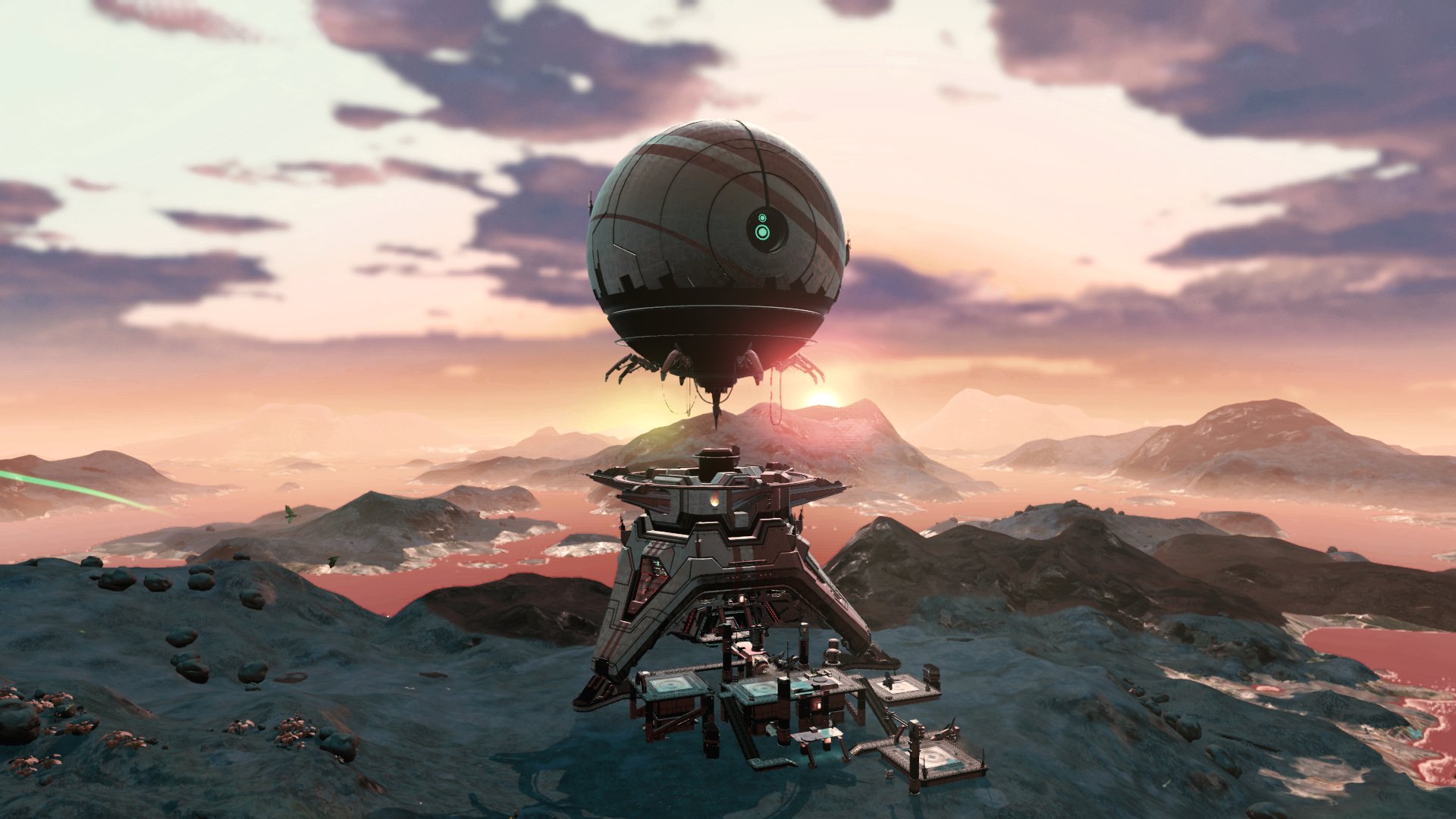
Kid A Mnesia: Exhibition – Radiohead team up with Epic Games to make an interactive demo soundtracked to their early 2000s duology of not-quite-as-good-as-OK Computer LPs. My old desktop PC’s GPU is not quite up to the job, but what I played of it was very impressive. I’ll be picking it up on PS5 at some point for sure.
Skeal – Just before the end of the year, I was introduced to Skeal, which is likely to become a new Christmas gaming staple along with Dracula Cha Cha. You can play it here (note that it doesn’t play nice with Firefox – there is also a downloadable version here). I can’t really say anything more without spoiling it.
My Game of 2021*
(*yes okay it came out in 2020, but I played it in 2021.)
I picked up Paper Beast as part of Sony’s ‘care package’ of bonus games for PSVR owners, with no great expectations. As with Horace last year, I’m shocked at how it seems to have been largely critically overlooked (although it’s more understandable in the case of a VR game that’s limiting it’s addressable audience from the outset).
Paper Beast is easily the best game I’ve played on PSVR, and I can only imagine it would be better still on a ‘proper’ VR setup. Even the previous title holder, Astro Bot Rescue Mission, I would still find I could only tolerate in sessions of less than an hour. Paper Beast captivated me so completely that I finished it on one multi-hour sitting without any discomfort.
Much as with Éric Chahi’s earlier game Another World, Paper Beast initially confronts the player with the mundane before dropping them into a completely alien environment. The most prosaic description of the game would be that it’s a linear series of levels where the player has to observe, then influence the behaviour of different species of simulated wildlife to solve puzzles. What it actually is, is a long, vivid and involving technology-assisted dream.
Some of the puzzles involve a great deal of patience for shepherding slow, erratic agents and sometimes the solutions feel like brute forcing or glitching the game’s physics. It feels like an incongruous (but welcome) throwback to the earliest sandbox and god sim games of the DOS era, where simulated ecosystems were all the rage. I expect it would be infuriating for the kind of dullards who hated The Last Guardian.
Chahi’s genius (aside from the actual ‘being a coding genius’ thing) is in breathing life and intention into characters sketched with only the lightest strokes. Paper Beast zeroes in on the things that VR does really well (following the player’s gaze, virtually unlocked FOV, extremes of scale, allowing the player to intuit distance and speed of objects in space, etc.) and constantly throws up new playful ways to surprise and delight the player. If you have any kind of VR hat I urge you to play it as soon as you can. (There’s also a non-VR edition, but I can’t imagine that it has anything like the same impact.)
Most of the other VR games I played this year were a disappointment, with the exception of Moose Life (standard Llamasoft fare, with the welcome addition of a ‘game tourism’ playing mode if you just want to soak up the trippy visuals without testing your reflexes).
Star Wars Squadrons (on PSVR at least) felt cheap and hollow – a huge letdown given the potential of the concept. Moss looked nice but it quickly becomes apparent that it’s another ‘VFX studio trying to make their first game’ situation (at least, that’s what I assume), with lots of basic errors in the platforming controls and animation making it a bit of pain to play. The Persistence was a serviceable sci-fi roguelike (and clearly either inspired by, or the inspiration for, NMS’s derelict freighter missions) marred by abrasively loud and stressful combat that it doesn’t really need.
I also enjoyed watching games being played and talked about in 2021:
Action Button Reviews: Season One – Tim Rogers’ long video essays about important games. Assuming you can put up with the presentation style, these are a must-watch.
Decino plays Cyriak Harris’s Going Down – One of the best ‘doomtubers’ expertly plays through and comments on surreal Flash animator and composer Cyriak’s Doom II megawad.
Half Life: Alyx but the Gnome is TOO AWARE – More hilarious improv nonsense from the team behind Half Life VR but the AI is Self Aware.
I Do Not Understand Hotline Miami 2 – Jacob Geller discusses Dennaton’s memorable but frustrating sophomore game. (My take here.)
Samus Aran Origins: Metroid’s Influences Beyond Alien – “Critical Kate” Willært digs up some early influences on Metroid and it’s Japanese home micro predecessors.
DF Retro put out lots of good content this year as well – their roundup of all the Playstation 1 launch titles was typical of the warm and enthusiastic style they’ve developed.
Tags: Action Button, Bonfire Peaks, CD Projekt Red, Cyberpunk 2077, Cyriak, Decino, doom, Doom II, Dracula Cha Cha, Draknek, Eric Chahi, Final Fantasy VII Remake, game title, Going Down, Guerrilla Games, Half Life: Alyx, Hello Games, Horace Goes Skiing, Horatio Goes Snowboarding, Horizon Zero Dawn, hotline miami 2, Id Software, Infinite State Games, Kid A Mnesia: Exhibition, Llamasoft, Metroid, Moose Life, Moss, nintendo switch, No Man's Sky, Paper Beast, PC, playstation 4, quake, radiohead, Skeal, Splitgate, SquareEnix, Star Wars Squadrons, Thatcher's Techbase, The Persistence, tim rogers, WayneRadioTV
Time once again for a round up of the notable games I played in the last year. 2020 was a pretty solid year for games (if nothing else), although lacking any decisive raising of the bar in the AAA space (except Half-Life Alyx I suppose, which I don’t have the kit to play yet). Still, there were plenty of top tier indie releases to fill the void.
Horace
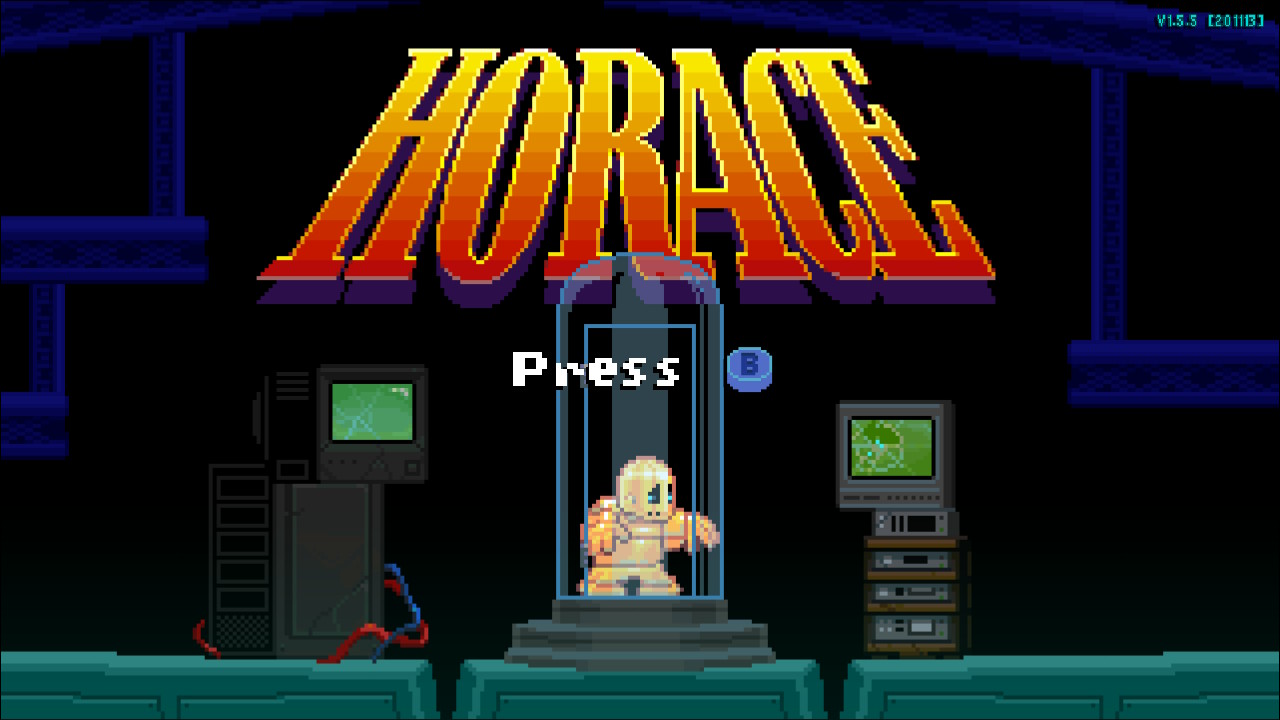
I’m going to kick things off with Horace because out of everything I played in the last year, this game has been by far the most unfairly overlooked. It’s out on Steam and Nintendo Switch.
Most of the tweets I see mentioning Horace are baffled as to why it hasn’t received more recognition. The sad fact is that by using pixel art and having the words “retro” or “nostalgia” featured anywhere in its marketing, Horace all but guarantees that it will be overlooked by many critics and award programmes (especially in the UK), where games have to be seen to be ceaselessly innovating and threatening the cultural dominance of film and television to be taken seriously. Llamasoft, PuppyGames and HouseMarque can all attest to this. There seems to be a common misconception that anything engaging with the history of the medium must be lightweight and disposable. As such, other than this lovely review by Christian Donlan for Eurogamer, Horace hasn’t made many ripples at all.
Horace is a narrative platformer that tells the life story of Horace, an android designed by a scientist (“The Old Man”) who tries to teach him about the human world by inviting him to live with his family and giving him a more or less normal childhood. The game’s creator (Paul Helman) cites Being There and Jet Set Willy as key influences, and there are also definite shades of John Wyndham (science fiction catastrophes playing out in a mundane English setting), Edward Scissorhands and the more Data-centric episodes of Star Trek: The Next Generation thrown into the mix.
The opening chapters serve as a tutorial, confined to the old man’s mansion on an island. We’re introduced to a large cast of central characters including the old man’s wife and their young daughter Heather, their driver, cook, valet and various others whose back stories are revealed over the course of the game.
Horace is introduced to various human pastimes (and likes video games best), starts to win Heather’s trust and understand the other characters’ personalities, and resolves to make it his life’s purpose to pick up one million pieces of junk. (It’s almost like this game has something to say about the life experience of its creator and likely audience? But you don’t climb Existential Crisis Mountain to fight the Depression Monster so perhaps it was being a bit too subtle.)
At a certain point in the story Horace is deactivated and put into storage for several years, during which a calamitous event befalls the world and the characters we meet in the first act are scattered to various locations on the mainland. So Horace sets out into the world to try and piece together what happened. I don’t usually care about spoilers but I’ve tried to keep this all as vague as possible, as a huge part of the appeal of Horace is that you have no idea of the ultimate parameters of the game and the many twists of the story at the outset.
Horace is a genuine fantasia, a flood of ideas woven into a story as expertly as this has every been attempted in a game. It’s in the vein of Wizkid, or Gunstar Heroes or Dynamite Headdy – or rather Dynamite Headdy as it would be if Treasure spent seven years making it, on an exclusive diet of 1970s and 80s British TV. It feels like an improvised series of bedtime stories build with gamestuff.
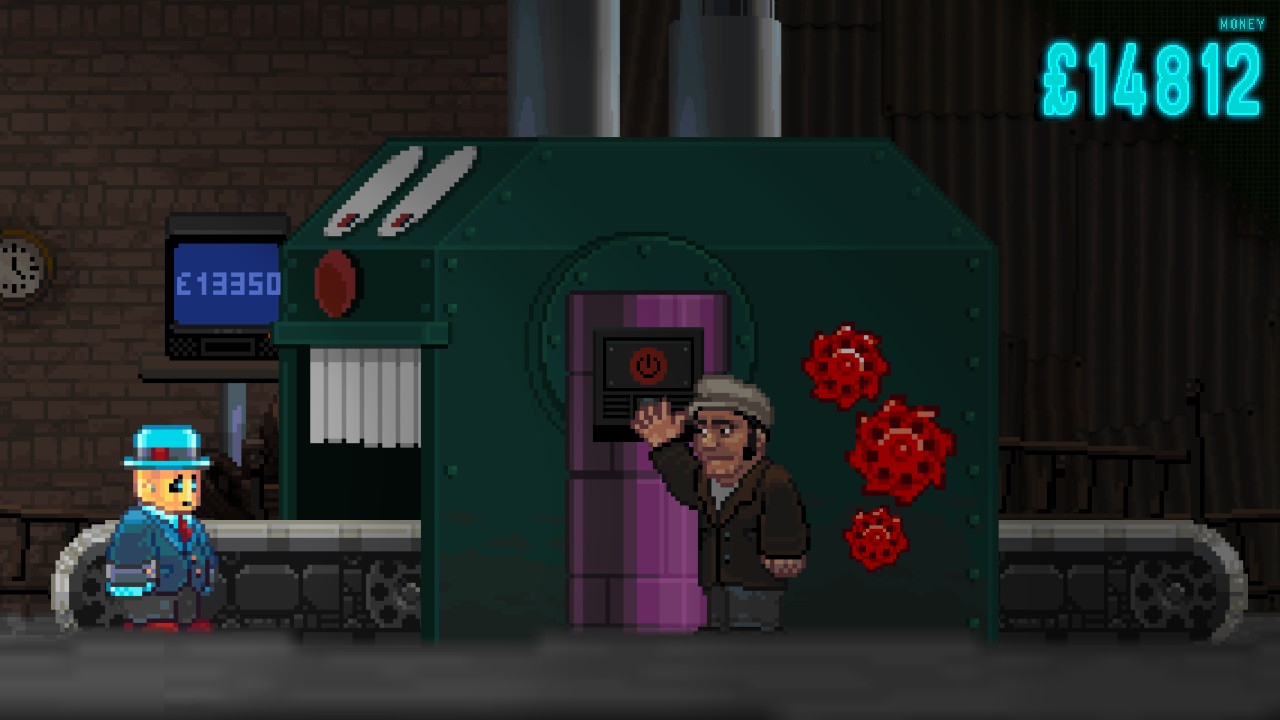
All of the (hundreds) of cut-scenes in the game are animated using the game’s sprites and narrated with Horace’s flat text-to-speech voice. This seems to be intended to evoke the atmosphere of children’s TV shows, and Horace’s guileless narration of the other characters’ dialogue is frequently used to comedic effect. (I can see how this stylistic choice would put some players off though.)
My understanding is that development of Horace started out in GameMaker and graduated to Unity as Helman’s ideas became more ambitious. For the most part, Horace is mechanically on the level of a 16-bit era platformer, with smooth animation, responsive (albeit twitchy) controls and rudimentary physics.
Early in the game Horace acquires some gravity boots which allow him to walk on surfaces at any orientation, the camera rotating freely to keep him upright. The boots affect Horace’s local gravity (walk up a wall and ‘jump’ off the end and you’ll ‘fall’ at 90 degrees to the ground) but not that of other objects in the world (unless he’s directly holding them). The surfaces of the world are bristling with flames, spikes, conveyor belts and other hazards, but Horace has infinite lives, resulting in gameplay that fans of VVVVVV and Super Meat Boy will feel at home with.
Horace’s long development unfortunately means that its design recalls the time before ‘masocore’ platform gameplay was largely discarded as a terrible idea. Some sections of the game are hair-tearingly difficult, even with infinite lives. (One vitally important tip would be to buy the ‘binoculars’ powerup as soon as it’s offered, as in some gravity-bending later areas half the puzzle is even working out where you’re supposed to be going.)
This is compounded by the stick controls on the Switch version not being very well tuned and the gravity boot mechanic being a shade too sensitive, requiring deft use of the jump button to avoid inadvertently sticking to low ceilings and outcroppings. And the less said about the swimming controls the better. Horace is the closest I’ve come to throwing my Switch out the window. It’s a testament to the quality of the writing that I managed to persevere through the most unfair bits because I was so invested in the characters.
There are more relaxing interludes breaking up the gauntlet of platforming challenges. Aside from the abundant story scenes, there are various optional sidejobs (including sorting post and drying dishes) to earn extra cash, plus lots of secret rooms and caches of junk squirreled away to help Horace get nearer to completing his primary life goal. The game also has a full into-the-screen sprite scaling driving engine, which powers several of the arcade games scattered around the world (pastiches of After Burner and Out Run and numerous others), a few getaway chases, and Horace’s recurring Raymond Briggsian dream of flying above the clouds.
Aside from the punishing difficulty and retro aesthetic, the other thing that might be putting you off trying Horace is the promise of hundreds of pop culture references. It’s true that the game is full of callbacks to (mostly 1970s and 80s) UK television, movies and games. But it’s a long way from being a tedious Ready Player One / Peter Kaye nostalgia-wallow. Key to this is that it never draws attention to the references or expects you to appreciate or even notice them, they’re just an extra garnish for players of a certain age and background. (The same approach taken in series 1 of Spaced.) I’m sure there are many that completely went over my head, being as I am a young person. (Cough.)
Aside from the spoof Thames TV ident that opens proceedings, for the first few hours Horace is the model of restraint when it comes to reference humour. Once you get into the wider quasi-open world, it starts to sneak more and more nonsense in. Most of the humour comes from just how incongruous most of the references are – you just don’t expect to encounter Pat Butcher, Mrs. Slocombe and Reg Hollis from The Bill in any video game. There’s a definite Viz / B3ta (MAD Magazine / Zucker Abrahams Zucker if you’re American) ‘naughty schoolboy’ streak to the gags, with many references seeming to be included to see what they could get past the publisher both in terms of appropriateness and parody protection in copyright law.
As the game is the largely unfiltered product of one mind, there are a couple of ‘edgy’ jokes here and there which probably should have been left on the cutting room floor on taste grounds (again, think B3ta at its least edifying moments), but they’re mercifully rare. Some of the references are also telling of the game’s long gestation – for instance Helman probably didn’t expect Bill & Ted to re-emerge in the pop culture mainstream when naming and modelling a couple of prominent side characters after them, a la Biggs and Wedge.
(Despite appearances this definitely isn’t a game for young kids, by the way – there’s quite a bit of violence, profanity and soft-ish drug use over the course of the story.)
If you can put up with the brutal difficulty and a few rough edges, I’d recommend Horace as probably the best example of a narrative platformer I’ve seen outside of Another World. It’s also probably the best example of a ‘culturally British’ game I’ve seen, concerned as it is with UK games culture, and without a red bus or phone box in sight. (And if you’re wondering, yes, Horace does go skiing.)
Streets of Rage 4
I’ve always been a bit wary when European indie studios announce that they’re reviving a well-loved old Japanese franchise. It can sometimes feel a bit presumptuous – being a lifelong fan of something doesn’t necessarily give you license to make a continuation of it (even if the actual, legal, ‘getting the license’ part seems to often be achievable these days).
I’d heard that LizardCube had done a faithful job with their previous revival game (Wonder Boy: The Dragon’s Trap). But Streets of Rage is a bigger challenge to take on. Streets of Rage 2 has sat at the pinnacle of it’s genre for a quarter century. During the heyday of the scrolling beat-’em-up, nobody managed to top it, not even in the arcades, or on more powerful console hardware. Even the original developers found they didn’t really have anywhere left to go when they were given a bigger ROM cartridge to make Streets of Rage 3 the following year. What could a new Streets of Rage game hope to be, beyond a nostalgic retread? An announcement trailer that seemed styled after a 1980s Saturday morning cartoon did little to assuage our fears.
And yet, somehow, they managed to pull it off. SOR4 feels as faithful a continuation of the series as can be reasonably expected so far removed in time and influences. Looking at the direction that Capcom and SNK went with their fighting game character designs toward the end of the 1990s, you can just about imagine this is what SOR4 would have looked like if Ancient had managed to get it greenlit during the Dreamcast era (and if contemporary commercial pressures hadn’t demanded most 2D franchises make the leap to 3D).
Playing SOR4 as a life-long SOR2 fan is like the moment when The Wizard of Oz switches from black and white to Technicolor. It’s a perfectly accurate mechanical recreation of the original games (so much so that you can even unlock the SOR1-3 versions of all the main playable characters). The original trio of Adam, Axel and Blaze have been redesigned to look a little older but still play the same way, and many enemies from the original games return. The new enemies and bosses added to the roster fit perfectly with the established style – the new antagonists, the Y Twins, nail the ‘aloof Bond villain’ aesthetic that made Mr X. and Shiva so intimidating.
Once again, we have the combination of lush, atmospheric backdrops, driving music and crunchy, ever-readable animation meshing together to carry the player onward. There’s even a bit of a story told through brief cut-scenes between stages, with the triumphant return of Adam Hunter (who hasn’t been a playable character since the first game in 1991) being a particular highlight. The comic book art style (lots of halftone dots and jazzy ink outlines) isn’t distracting, and lets the artists do a lot with what is by modern standards a relatively sparse number of animation frames per character.
You can’t talk about a Streets of Rage game without mentioning the music, and SOR4 acquits itself well on this front too. There are new tunes (incorporating production techniques from the original games’ soundtracks) from Yuzo Koshiro and Motohiro Kawashima, but main composer Olivier Deriviere’s tracks can’t be overlooked either – the themes for the police station and biker bar levels (the latter sounding like nothing so much as Daft Punk and Wizzard getting into a drunken brawl) standing up to repeat listens. There’s even a track by Scattle in there – a nice nod to Hotline Miami’s SOR influences.
In the standard ‘Story’ mode, the player’s lives are replenished after each round and there are infinite continues, allowing the difficulty to be pitched at a level that will offer a meaningful challenge to new players, and adds just enough jeopardy to get them properly invested in learning the nuances of each character.
There’s also an ‘Arcade’ mode which works in the more traditional manner (see how far you can get with a persistent pool of lives and special attacks) which is a great way to dip into the game again once you’ve beaten it a few times and unlocked everything. Getting the difficulty balance right is the key to the whole enterprise – it makes SOR4 feel as exciting as playing (and honing your skills on) a scrolling beat-’em-up in the arcade, without the reliance on frequent cheap deaths.
I do have a few criticisms, but they’re minor. There are a couple of ‘gimmicky’ sequences that require a specific approach to get through without losing loads of health (e.g., the dojo) which break the flow a bit. Some of the cut-scene artwork is perhaps a little bit too close to rough storyboards. And in terms of backgrounds and set-pieces, everything is a little bit too conservative – there’s no particularly amazing Treasure-esque stuff done with parallax, scaling and rotation that you feel the original developers might have tried given access to essentially unlimited hardware power, although the resulting game hits a solid 60fps on all platforms so perhaps it’s unfair to expect too much. And finally, while all the characters have distinct playing styles, they’ve perhaps resulted in Axel being a bit too slow and rubbish by way of contrast, although I don’t know why you’d want to play Axel anyway once you’ve unlocked Adam, the best character.
Overall, SOR4 is a worthy companion piece to SOR2 and is an essential purchase. Five knife-wielding Galsias out of five.
A Monster’s Expedition (Through Puzzling Exhibitions)
Disclosure: I know some of the people involved in this game and the designer/director (Alan) was nice enough to send me a copy.
You’re a monster (and in the game, etc.). Specifically, you’re one of the monsters from previous Draknek game A Good Snowman Is Hard to Build, on a day out exploring a museum dedicated to humans (who we can infer have gone extinct at some time in the past, for reasons possibly related to why the museum is located on a series of tiny islands where England – or ‘Englandland’ in monster parlance – used to be).
On a superficial level, A Monster’s(…) is a bit like (the equally brilliant) Stephen’s Sausage Roll. They’re both games where you explore a series of islands, solving puzzles by pushing and rolling objects around a Sokoban grid, with infinite levels of undo (which you’re encouraged to use often).
Unlike Stephen’s Sausage Roll, the possibility space for solving any given puzzle here isn’t mind-destroyingly enormous. (No disrespect to SSR – it’s a game I love but one I’m resigned to probably never completing.)
Most of the puzzles in AME(TPE) are designed in a way that lets the player intuit the approach they should be taking to get to the solution, based on the situations they’ve already encountered and new rules that can be discovered through experimentation. Sometimes the first step you make on reaching a new island will accidentally cause a new mechanic to be demonstrated to you. Combined with the laid back presentation, the effect is to make the game feel welcoming. While the difficulty level creeps up as the game progresses, it never spikes suddenly or contrives to make the player feel like they’re trespassing in a space reserved for hardcore puzzle heads.
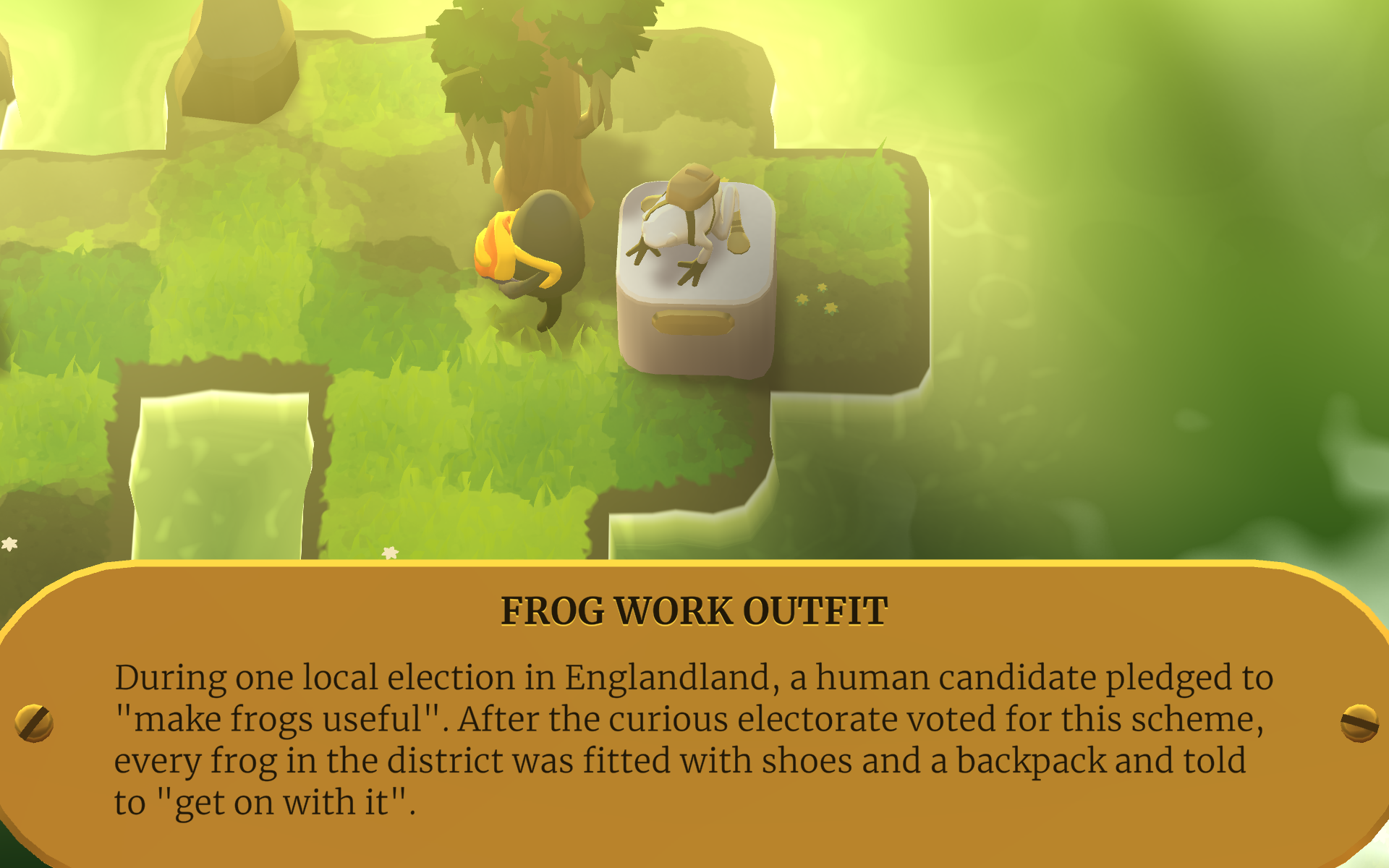
While the core components of the game don’t really change much throughout (the goal of each island – to get logs to specific places to make bridges and rafts – stays more or less the same), every few islands the main ‘path’ will lead you to a different region (or ‘biome’ as the kids say) of the world map. There are also frequent rest stops, puzzle-less islands containing a museum exhibit (typically a mundane object from the human world with a plaque ‘explaining’ what the monsters speculate it was for – I know this sounds a bit ‘Radio 4’ but they’re really well done), or sometimes just a bench or a kiosk where you can have a cup of tea.
There are loads of other nice little touches, like your monster being able to sit on the shore and dip their feet in the water, the nice solid thud when they try to kick unmovable rocks, and that walking animations can be skipped to zip around solved areas quickly.
Long-time readers of this site may have noticed that I usually focus on two extremes: games that took far too long to make, or games with a strictly enforced narrow scope that have been massively polished within those bounds. AME(TPE) is a great example of the latter, and easy to recommend.
Fall Guys
For a minute, it looked like Fall Guys was going to break through as a cultural phenomenon like Fortnite, but then Among Us (a game which has been quietly ticking along for two years) suddenly blew up, and it was yesterday’s news. I don’t think any analysts could have predicted this sequence of events.
My hat is off to Mediatonic for making such an out-there concept for a game a megahit, and pulling off the coup of getting it distributed as Playstation Plus Game of the Month, guaranteeing the massive player base a battle royale-like game needs out of the gate.
Personally though, I couldn’t get on with Fall Guys and found some of the design decisions inexplicable. The Unity engine gets a lot of uninformed criticism but in the case of Fall Guys it really, really feels like Unreal would have been the more appropriate choice – if you’re building what is essentially a battle royale game, it’s the obvious proven tool for the job.
On PS4, Fall Guys looks weirdly rough, like there’s no anti-aliasing being applied or it’s not working correctly. Long stretches of playing time are taken up staring at loading and matchmaking screens and unskippable stage intros. The argument that the soupy controls and bafflingly constrained camera are intentional choices (it’s supposed to be knockabout Takeshi’s Castle fun where everyone has a chance and skilled players can’t dominate) is a bit fishy when you consider that games like, for instance, Mario Kart manage to achieve this goal while having controls that feel good and reliably convert player intent into action.
But hey, at least it was free. (And for the most part people have stopped calling it’s Twitter account “genius”.)
Doom Eternal
I’ll put my hand up and admit that I made a big mistake and bought Doom Eternal on console, having convinced myself that first person shooters were surely mostly tuned for playing with a joypad these days. Doom Eternal is very much designed around keyboard and mouse. As someone without thousands of hours of Call of Duty muscle memory, I found it manageable for the most part on Normal difficulty, and trivially easy (much like Titanfall 2 on Normal) on Easy. I strongly expect my overall impressions of the game would be more enthusiastic if I’d played on PC.
With that caveat out of the way, is Doom Eternal “not Doom”?
Doom Eternal feels like a 1998 Mega Drive game. (Or, for slightly younger readers: Grand Theft Auto: San Andreas.) id have been tasked with getting bigger, better, more out of the same hardware resources when their 2016 iteration was already pushing things about as far as they could meaningfully go. (The bizarre decision to again include the Switch as a target platform can’t have helped.)
The result is a game that tries to trim away any fat that it thinks the casual player won’t notice. There are more enemy types (and a neat visible damage system) but all the enemy models are less detailed and less expressively animated. Glory kills are shorter (which is welcome in gameplay terms) but quickly become repetitive. The brief, first-person cut-scenes that so economically established Doomguy’s personality in Doom 2016 and which every video and review gushed over? Supporting characters with names and discernible motivations? Totally excised here.
The elaborate heavy metal album cover vistas from the pre-release trailers are intact, but for the most part they’re static, non-interactive skyboxes with the bulk of the levels made up of small, often reflectively symmetrical, nondescript arenas linked together with unwelcome janky platforming challenges. (“Soaring from one planetoid to another in Super Mario Galaxy is fun, but wouldn’t it be better if you had to learn a series of jump and dash inputs by trial and error and then have the game only randomly let you stick to a target wall?” – nobody at Nintendo)
Somewhere in the development process Martin and Stratton wrote “Things that we can add with minimal RAM / GPU cost” at the top of a whiteboard and you can bet every inch of that board was filled. There are reams of superfluous ‘lore’ text. There’s a skill tree and layer upon layer of weapon upgrades and perks. I lost count of the number of buttons on the controller that are eventually given over to different flavours of ‘a smart bomb that mulligans one or more enemy’. (BFG, chainsaw, unmaker, grenades, blood punch, dash attack… it’s been a while, I’m sure there were even more.)
I know a lot of people welcome Eternal becoming a ‘hybrid character action game’, but I’m not a hardcore fan of that genre so it didn’t do much for me. Sprinting around to try to top up different resource meters isn’t as fun as Doom combat.
But, importantly, the Doom combat is still there, under all this needless embellishment, and it’s substantially tuned and tightened up. New movement options like the directional dash and grappling hook make it hard to go back to Doom 2016.
It’s been clear from the past few ‘id renaissance’ games that they’ve typically focused on specific classic id titles to inform the design of each new one. In Doom Eternal’s case Quake III Arena seems to have been a major influence, with lots of jump pads and verticality to the combat. The influence is even apparent in the game’s art style, with lots of bare metal architecture evoking id Tech 3’s ubiquitous cubemap shaded steel. (Doomguy’s space fortress that you visit between levels would be right at home in Q3A.)
In terms of writing and tone, I think id didn’t learn the right lessons from the surprise mega-success of Doom 2016. There’s the aforementioned airport bookshop carousel’s worth of awful flavour text. It’s also very apparent that the writers were inordinately pleased with two or three (not actually that good) meme-ish jokes from Doom 2016 (“Rip and Tear”, “Mortally Challenged”, “Doot”, etc.) which are run right into the ground here.
Doom 2016 still had a bit of a gritty, grimy edge to it’s gore (an echo of Doom 3), whereas Doom Eternal seems to push for a much lighter, cartoony approach. Case in point, most of the demons’ eyes now have pupils and pull silly faces while being pummelled. You’re no longer fending off creepy, relentless deadites – it’s more like smashing rubbery muppet piñatas.
I don’t really see the logic of this change, unless it was focus-group driven. The game is still full of blood and guts, still carries an 18+ rating, and the enemies being fantasy creatures already gives the artists extra leeway to amp up the carnage, so why water it down? (To it’s credit though, the game now gives you the Berserk power up exceedingly rarely, so that set of hilarious, gloriously over-the-top custom death animations retains it’s power to surprise and delight.)
What else was on that whiteboard? Doomguy speaks! Hell comes to Earth! Doomguy goes to (slightly ambiguous so as to not scare Walmart) Heaven! There’s still a Switch port for some reason! Collect vinyl toys! It’s all a bit ‘Gremlins 2‘, but then I suppose lots of people like Gremlins 2.
I realise the above sounds mostly negative, but there are still plenty of things to like about Doom Eternal – it was starting from a high peak with Doom 2016, and in spite of everything Eternal is still at the higher end of ‘good’, in the top bracket of single player FPS for the generation, if not quite hitting ‘great’.
So it Doom Eternal “not Doom”? Interpreting it as a power fantasy is a fatal misreading of the original Doom. Doomguy was meant to be the player in extremis, no match for the forces of hell but sufficiently well armed to – maybe – hold them at bay for a while. (The whole ‘space marine’ thing was to explain why you were there, and why you could carry and expertly use eight weapons and sprint at 70mph.) You’re not supposed to be Master Chief, you’re not some brooding Warhammer 40K demigod.
Doom’s tagline was “where the sanest place is behind a trigger”; Doom Eternal’s is “the only thing they fear is you”.
I still harbour a vain hope that they’ll park the franchise again for a while now, and in a few years we’ll look back and see this incarnation of Doom as a weird anomaly (kind of like Wolfenstein 2009); an offshoot from the mainline Doom games that stand apart as the ones you couldn’t mod and that were never scary.
No Man’s Sky (again)
I am, of course, still playing No Man’s Sky regularly. There have been scads of new content and features added since last year, including crossplay, instanced dungeons, massively improved base building, gorgeous new bloom lighting and a big injection of new flora, fauna and planet types. For the first time in a while the game is in a state where I can confidently say that there’s lots of phenomena that I’ve not yet encountered. (I’ve only once and fleetingly seen a sandworm, for instance, and I’ve not found any wild robots yet.)
As a console player, I will of course be upgrading to a next-gen machine at some point in the future at which time I’ll take advantage of the most recent round of improvements to scene complexity and loading times. I’m finding that I’m not that enthused by the prospect though. It’s the same game underneath the higher framerate, resolution and draw distance, and even with all the updates it’s starting to show it’s age a bit.
Seeing people’s PS5 screenshots feels a bit like when you got a whizzy new GPU back the day and ran Quake II with everything maxed out, you know? I’m more interested in what Hello Games do with their tech in future projects now that the next gen consoles’ super-fast storage (presumably) opens up much greater possibilities for more detailed (and more persistent) world simulation.
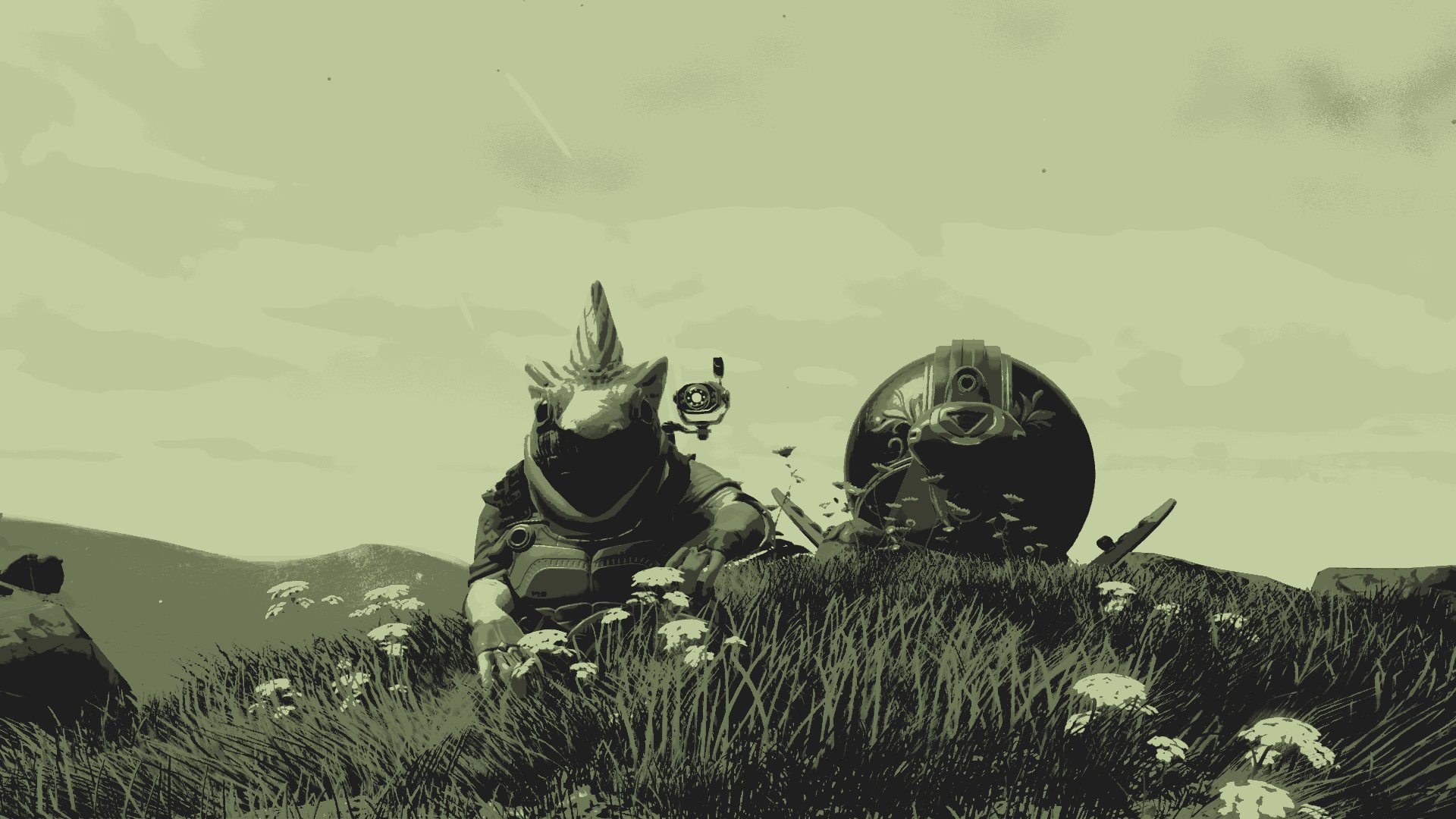
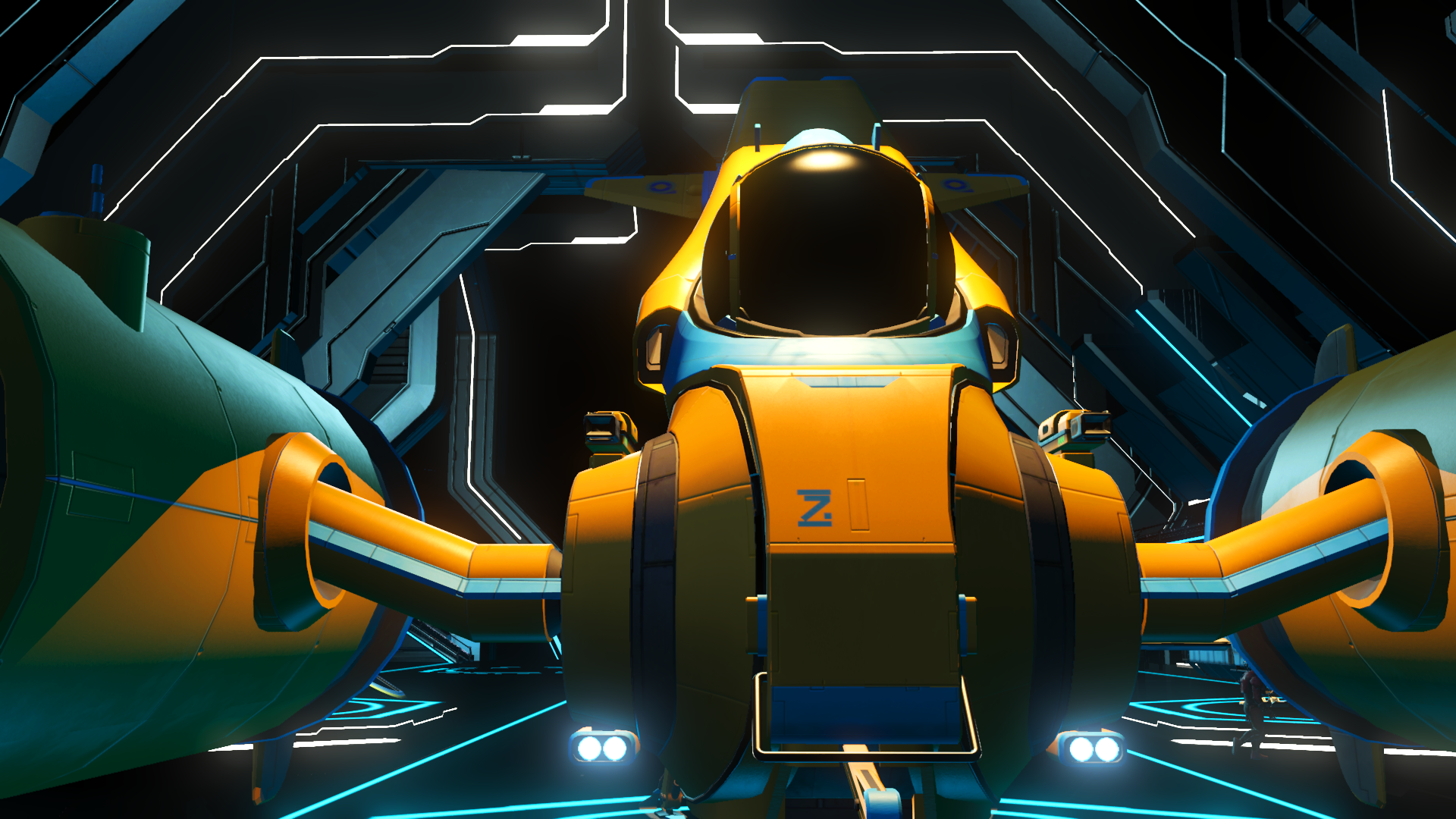


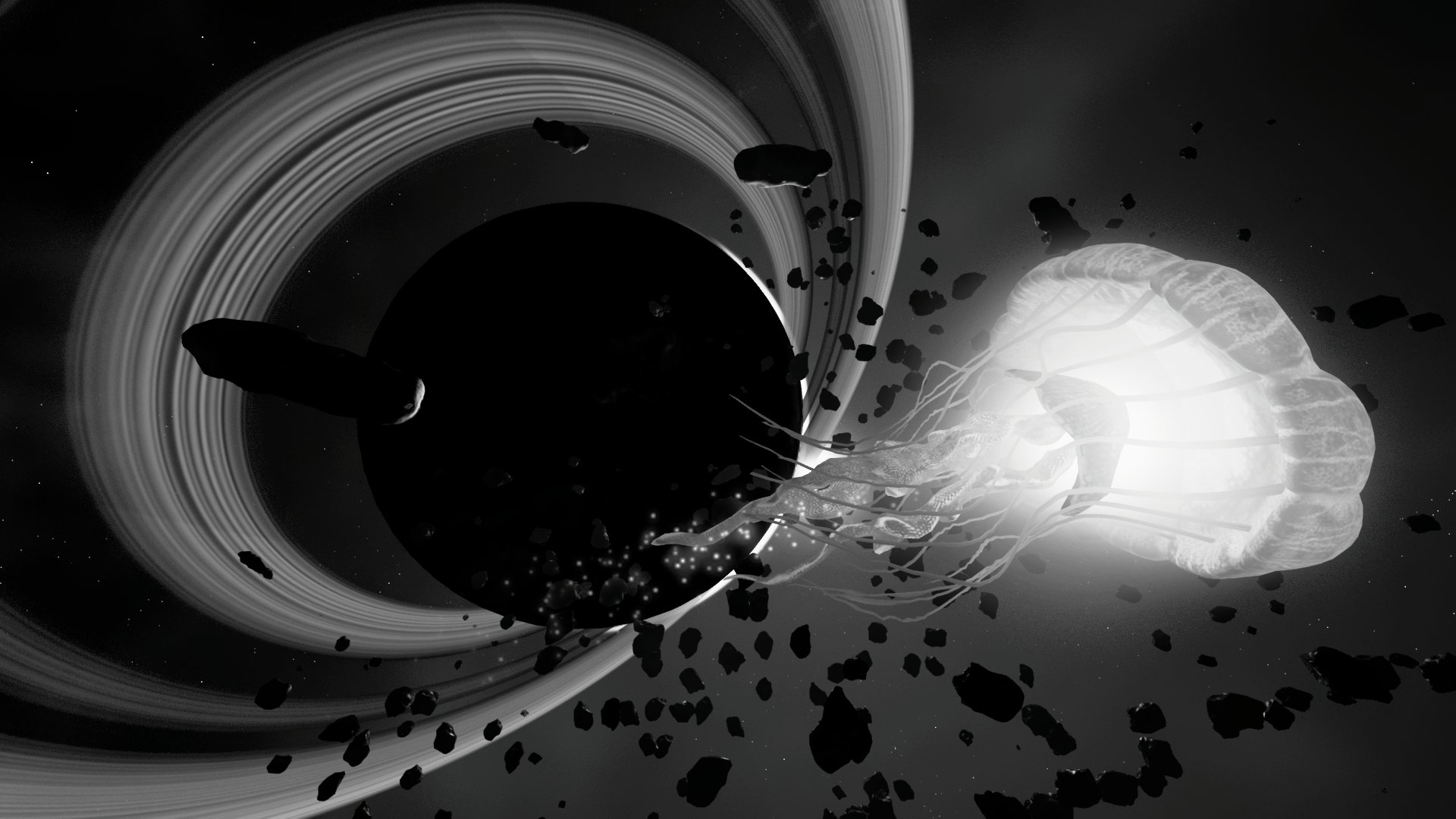
Noita (again)
Noita finally came out of early access in October. Everything I said about the game last year still holds true, except now there’s vastly more new spells, monsters, biomes and secrets to explore. I’ve now completed the game a few times and am happy with my approach to playing it which has fallen into a pattern (much as it did with Spelunky), mostly involving spending a lot of time crafting wands in the early areas and getting killed through misadventure.
I know there are players who have taken a much more serious approach to the game, curating saves and good random generation seeds to master it’s various mysteries and achievements, but I’m still happy to play it like an arcade game (because it is one), accepting the outcome of risks and randomness. (Oh and I wrote a song about it.)
Cyberpunk 2077
I started playing Cyberpunk 2077 at launch last month, and I’ve just finished my first (fairly exhaustive, 100 hour plus) playthrough. It’s pretty obvious now that people have had a few weeks to acclimatize that 2077 is an important game, setting a new benchmark for open world RPGs in terms of world design and story presentation.
The badly fumbled launch and the misguided attempts by the gutter end of the specialist press to frame the game as some kind of lurid exploitation piece before they’d even played it (why would a major AAA studio, with a coveted cult classic IP, need to court a fringe audience of edgelords?) will mostly be forgotten by Summer. Nobody cares these days how poorly GTA V ran on seventh generation consoles, or the narrowness of No Man’s Sky version 1.0’s feature set. A few people may eventually look back and cringe at how they carried on online in their student days but that will be about it.
I’m playing on PS4 Pro. It’s… tolerable. It still sometimes crashes (though dramatically less often with each patch up to 1.11) and the UI is ‘cantankerous’ if you try to do something unreasonable like open a menu or switch cameras in a car. I’m profoundly aware that I’m not experiencing the game as intended (and in due time will seek to rectify this), but the quality of the craftsmanship is such that the game rarely becomes a struggle to control or looks objectionably ugly.
At 1080p the character models are more than detailed enough for the performance capture scenes to reel you in (the occasional glitching cigarette aside), and the dynamic lighting and level of detail system keep the outside world moving at a decent clip (at least when on foot), and from time to time offer up a genuinely beautiful composition. Shadow of the Colossus on the PS2 would be a good point of comparison. It’s not liquid smooth, and it’s running the PS4 as ragged as the Bluesmobile, but it’s managing to conjure an affect that shouldn’t even be possible on such modest hardware.
(Oh no, cars and NPCs sometimes disappear when I turn around, to absolutely zero gameplay effect, in this game that is being required to support a hardware baseline with less computing power than a modern phone. If you think this is evidence of poor design decisions, follow better YouTube channels.)
As nothing can be discussed on social media without it being categorised as perfect or a catastrophe, Cyberpunk’s problems on the base consoles have been blown up into absurd claims about the underlying game being “fundamentally broken”.
Yes, there are some rough edges, but it’s not a comparable situation to a typical Bethesda open world game, where you’re practically required to use third party mods to finish work on the UI before you can play. It’s not like the S.T.A.L.K.E.R. games, my lasting memory of which was having to use a FAQ to know which of game’s prompts had to be ignored to prevent the game falling into an unwinnable state. We’ve grown accustomed to open world games running flawlessly by Ubisoft cranking out another shiny but mediocre one every year. Cyberpunk 2077 is an open world RPG, though, and it’s reaching a little higher.
The trade-off for putting up with being intermittently needled with jank is an astoundingly immersive game world. Given the choice between a game like this and another slick but hollow action/adventure game like God of War or Spider-Man and I’ll pick flawed but ambitious every time.
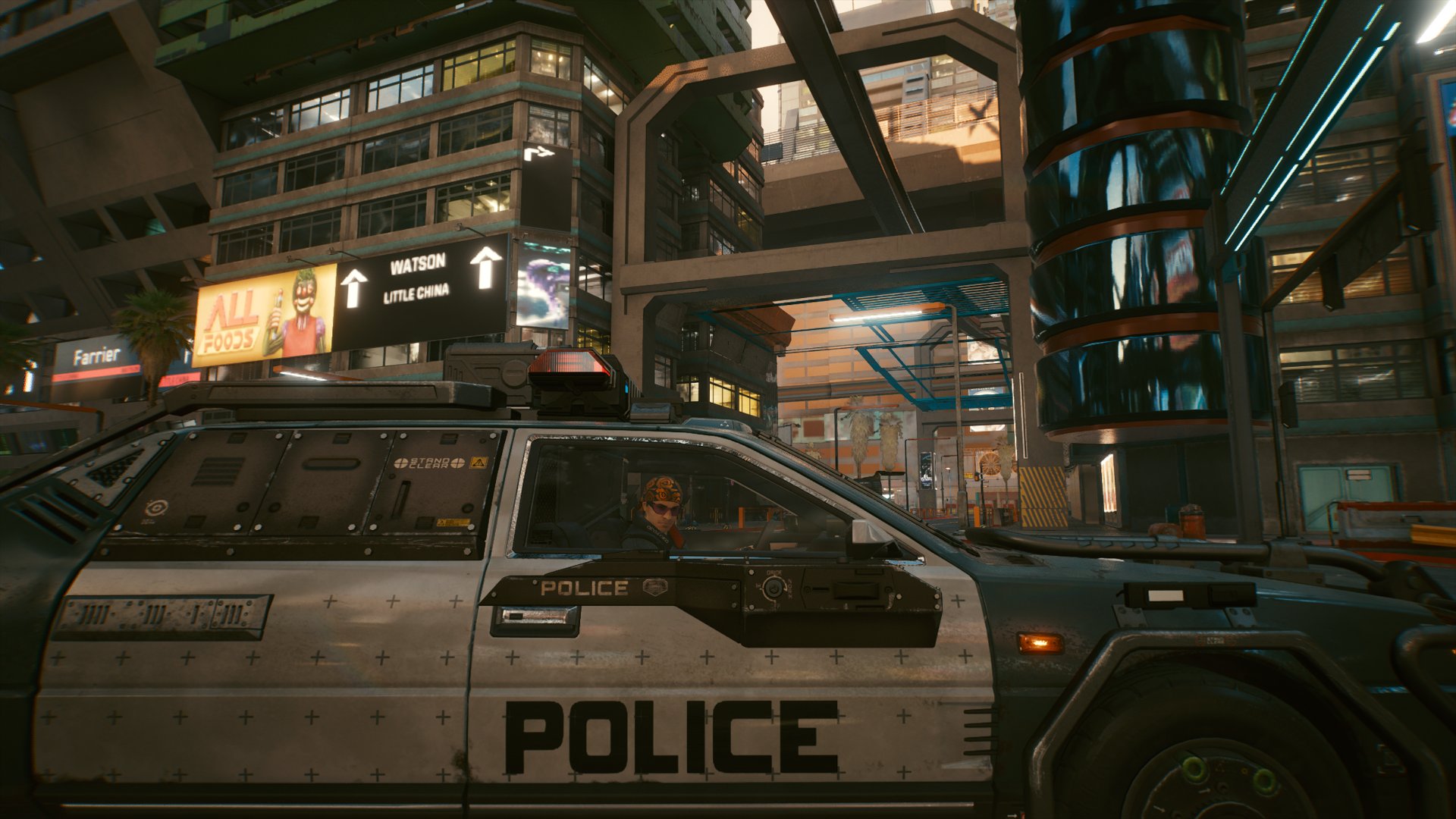
In terms of gameplay Cyberpunk 2077 is an XXL Just Eat takeaway pizza. It’s unashamedly trashy, 8/10 comfort food in the same way the bulk of Batman Arkham Knight or Breath of the Wild were, except with higher production values (and far less copy-pasted filler content). The core of the game is dealing with discrete missions by applying a loose mix of stealth, hacking, shooting, melee combat and (much more rarely) negotiation, like a two-fisted blend of Deus Ex HR/MD and the Mafia trilogy, with the odd bit of driving, adventuring or private detective work thrown in.
Many of the game’s systems are streamlined to minimise time spent failing missions for pedantic reasons (and to an extent discourage save scumming). Hacked security cameras stay hacked, and you have a couple of seconds to react if one spots you before the alarm is raised. There’s a global switch that stops you being able to outright kill anyone with your attacks (although explosions and other world hazards can still be deadly) if a mission calls for it, so you’re never boxed in to using stealth takedowns if you don’t feel like it.
Unlike Deus Ex, gunplay actually feels good here, pistols and revolvers particularly striking a good balance between being crazily overpowered hand cannons and requiring just enough skill to make dealing with groups of enemies at close quarters a bit hairy. The minigun you can sometimes obtain mid-mission (but can’t keep all the time, sadly) makes you feel like you’re fucking ED-209. The sniper rifles are just ludicrous. It’s definitely the case that you can become too overpowered in combat and/or hacking fairly early in the game taking away most of the challenge, but you can always turn up the difficulty level or set your own limits on your playing style (or use mods) I suppose. Outside of some stealth-heavy or booby trap laden areas, it’s never a particularly stressful experience.
The ‘main quest’ story missions are tense and exciting without ever doing anything mindblowing. (The in-engine montage cut-scene at the end of the prologue with a flurry of jump cuts is pretty cool though.) The scope is genuinely impressive, with different storylines taking the player to wildly contrasting parts of the game world and presenting them with characters and situations that let the player express more facets of their character and learn more about how Night City’s society fits together. The movers and shakers in NC variously see the player character (V) as an uncultured outsider, a useful asset, a potential threat, or an easily manipulated mark.
While there are obviously ‘tiers’ of quests ranging from expensive-feeling cinematic adventures to more mundane mercenary gigs (you can usually grade these by ‘amount of Keanu Reeves involvement’), a surprising amount of the game’s content falls into the former category. Some of the side stories (as well as the main story in Act I) change tack as deftly as a golden age Simpsons episode. Anything from taking on a gun for hire contract to ordering a coffee to wandering around a market can lead to an unexpected side story kicking off.
The main story (your character, a small-time mercenary, or ‘punk’ you could say!!, gets involved in a heist gone wrong that results in their mind being merged with a neural construct of a long-dead anarchist rock star, and has to find a cure before their personality is overwritten entirely) is impressively executed. The combination of lighting, character models (with fancy dynamic lip syncing tech), voice and performance capture often leads to strikingly naturalistic scenes. (Compare the first encounter with ripperdoc Viktor Vektor with the equivalent scene in Deus Ex Mankind Divided to see how far we’ve come.)
There’s been so much focus on glitches in the traffic and crowd systems that a lot of people seem to have overlooked all the hard technical problems Cyberpunk does quietly solve. There are (for instance) several sequences where multiple characters will get into a car and carry out a fully animated conversation while driving around the city, without the game ever breaking out of the first person view. The extended scene with Jackie and V going to do a deal with the Maelstrom gang from the ‘fake’ E3 demo is incredibly closely reproduced.
The writing on the other hand is probably not going to win many awards. There are memorable lines and side characters, but the main cast (Jackie, Rogue, Johnny, etc.) are sketched a bit thinly. Keanu Reeves does his best with the material but as voice artists go he’s no Mark Hamill. Silverhand’s cynical ‘fuck the man’ commentary peppered throughout the game is often closer to Rik from the Young Ones than Neo or John Wick. Still, it is refreshing to have a mainstream game based around a different dynamic for the two main characters than Sad Gruff Dad and Escort Mission Child.
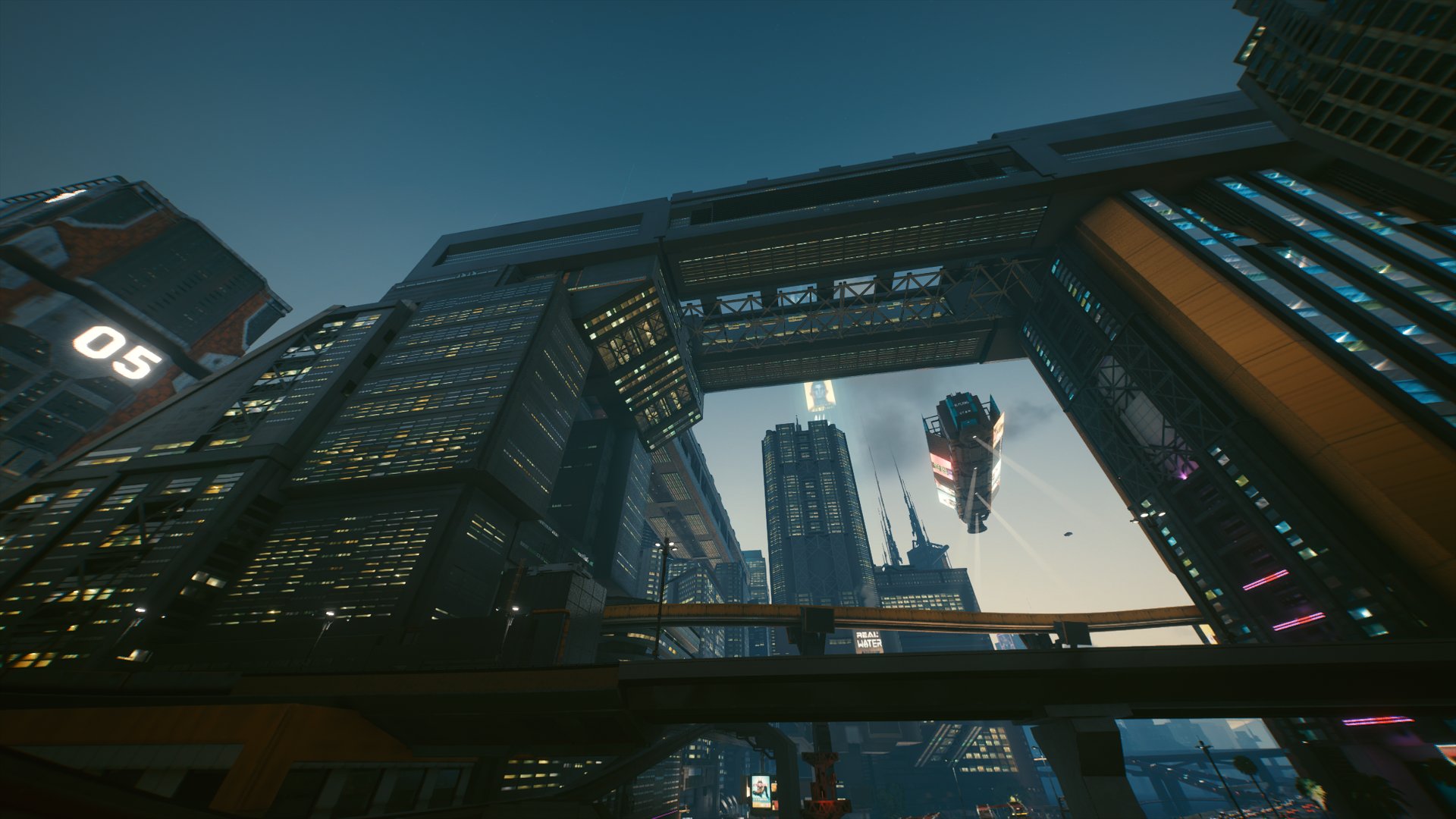
But even if there was only a tiny fraction of the big budget ‘cinematic’ content that there is in the game, Night City would still be captivating to explore all by itself. It’s no exaggeration to say that it’s the next leap in creating a convincing sense of place in a game, up there with S.T.A.L.K.E.R. and Half-Life 2. It’s still nowhere close to the scale of a real world major city, of course, but it’s unbelievably, overwhelmingly dense within its few cubic kilometres. It’s like Bloodborne dropped into a petri dish the size of San Francisco.
There are walkways over rooftops over elevated streets over streets at the bottom of Kowloon-esque urban canyons where the sky is barely visible, with separate ‘bottle’ maps (reached by loading pause elevators) perched high in the towers and arcologies above all that. And that’s just the inner city. There are miles of desert wasteland, sprawling solar and hydroponic farms, brownstones, motels, slums, suburbs, abandoned malls, forested hills and man-made mountains of trash.
There are buildings and neighbourhoods used for perhaps one throwaway gang skirmish that are bigger than Deus Ex’s version of Prague, and they nearly always have a few unique touches. A lot of locations are built from snapped together components but the sheer amount of assets hides this well most of the time. (There are dozens of bathrooms in Night City, and no two of them look even slightly the same. This dedication to presenting endless diversity to avoid breaking immersion extends to food and drink, weapons, clothes, crafting items and even vending machines and laptops.)
The first few hours of the game are total information overload with hardly a moment to catch your breath. Even once you’ve spent many hours in the game, gained some street smarts and have mopped up most of the available side gigs, you can still spend hours just wandering around the city and finding entirely new (often huge and meticulously detailed) areas, some of which seem to exist for no other reason that game tourism. It feels like CDPR’s level designers have hit some critical mass of having a huge library of assets and a workflow that allows spaces to be built and decorated rapidly.
We’ve all seen Blade Runner, Ghost in the Shell, Robocop, Demolition Man, Akira, The Matrix and Back to the Future II, so by now the visual language of cyberpunk is extremely familiar. But by showing a whole world operating under those rules (including – especially – the mundane day to day stuff) 2077 still sometimes has the ability to surprise.
A street gang who fetishise extreme, dehumanising cybernetic implants is a cool concept as a few pages of an RPG rulebook, but having them get up in your grill in a tense arms deal or going to one of their parties is something entirely other. We’ve seen lots of games with decaying, abandoned urban environments since Half-Life 2, but seeing a bustling city choked with garbage and squalor drives home the desperate state of the situation. Outside of the pristine Corpo Plaza, the spoiled parks and leisure areas of Night City are really viscerally unpleasant!
The game may not be a sophisticated commentary on inequality and corporate power, but it is an unambiguous one. It’s fair to say that the game doesn’t delve too deeply into the more weighty implications of its themes, but it does sometimes dabble in real-world parallels (AI, healthcare, ecology, private policing, human trafficking, cryptocurrency, access to justice, etc.) – it’s mostly concerned with the world at street level, outside of one thread of the main story.
This is a very late-1980s vision of the future, as the source material dictates, although CDPR have wisely omitted or rethought some of the more dated aspects. It’s hard to fully gloss over the streak of anti-Japanese sentiment that is present in most 1980s cyberpunk media, but 2077 is at least self-aware enough to not revel in it. (It has to be said that some of the Asian characters in the game are still a bit stereotypical though.)

I know that games have gone from being a techy niche to a mainstream entertainment medium in the past twenty years, but it’s still been jarring to me to discover that there are so many people out there who seem to not see the prospect of an open world cyberpunk game as implicitly compelling. And by ‘implicitly compelling’ I mean the Holy Grail the medium has been building toward for the past few decades. (And is still building towards, as let’s be clear, Cyberpunk 2077 is far from perfect.)
The dream of CRPGs in the 1970s was to simulate Dungeons & Dragons, the dream from at least the late 1980s has been to let you live and make choices in the world of Blade Runner and Neuromancer. This is most clearly illustrated when we look at the choice of subject matter that so many high profile designers gravitated towards as soon as they had a few hits under their belt and were given a blank slate: Syndicate, Deus Ex, Blade Runner (of course), Beneath a Steel Sky, Snatcher, Interphase, the cancelled Trinity and Cyberspace, even Final Fantasy VII after a fashion were all attempts to realise this dream with the technology then available.
Maybe it’s an age thing? It’s hard to imagine someone who played Sim City 2000, Syndicate and Doom for the first time within a few months of each other as an impressionable teenager in 1993, with a cultural diet of MTV, anime on VHS, 2000AD and Games Workshop could imagine that games were ultimately building toward anything else. Every big technical advance was being measured in relation to reaching that end point. At some point we must have stopped explicitly voicing this desire, and people who have come into games later have simply not picked up on it, which is why the feverish level of hype must have seemed strange.
At certain points when just drinking in the atmosphere of Night City for hours at a time, it has occured to me that this must be what being pandered to feels like. As AAA game budgets have gotten bigger and their subject matter has had to become more broadly appealing, I’d pretty much given up on seeing a game of this scale have a setting and subject matter I really cared about. I can see why, say, The Last of Us or Red Dead Redemption 2 or Grand Theft Auto or Call of Duty have fan followings, but I’d long been resigned to the fact that (with a few exceptions like the modern Deus Ex games) game settings were something to be more or less put up with while focusing on any mechanical interest that they allow.
(Star Wars fares a little better, but you’re always conscious of the fact that you’re playing a piece of merchandise. The characters are too ubiquitous to let you have any feeling of personal ownership over them.)
Cyberpunk by comparison lets the player spend most of their time doing things they care about and that are narratively and/or aesthetically rewarding. You can specialise your character to a much greater degree than in Deus Ex (e.g., going so far as removing the ability to quickhack entirely if you favour close quarters combat), and spend hours picking their outfits and tinkering with the specs of their weapons and cyberware. Every car and building looks like something out of the wildest Syd Mead concept art, with the satisfying material solidity of the coolest Matchbox car or science fiction vehicle playset you had as a kid.
Aside from most of the generic ‘fixers’ who dish out low stakes missions in each district of the city, most of the major characters are either cool badasses who you’ll want to help and impress, or awful dickheads who you won’t feel bad about crossing swords with or just flat out walking away from (very few quests in the game are mandatory and there’s so much content that you won’t feel shortchanged if you choose to skip some of it). (This goes for the game’s factions too – depending on your route through the game you’ll likely end up sympathising with some and having abiding grudges against others.) There are loads of secrets and subtle bits of worldbuilding, and endless diversions included for their own sake (adopt a cat, ride a rollercoaster, befriend various abberant AIs) that make the world feel more human.
Both the game engine and the world they’ve built on it feel like they have a lot of untapped potential. I really hope that along with the slated DLC we will at some point see more stories told with these resources (something farmed out to another studio in the manner of Fallout New Vegas perhaps).
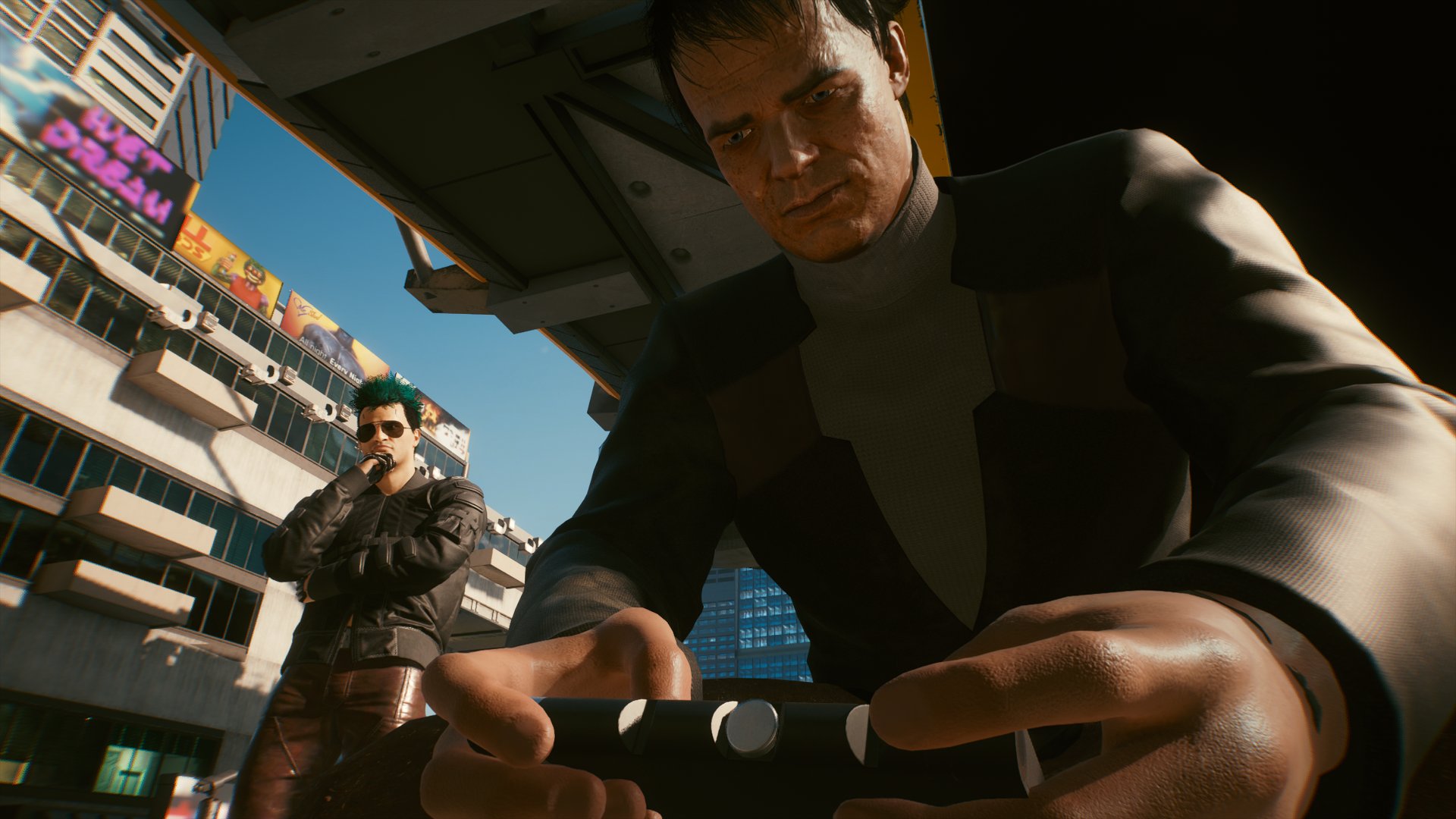
A final thought on the messy launch: if we’re to expect ‘mid-generation’ console hardware refreshes again in future, I really hope that the manufacturers make a more decisive commitment to establishing them as the baseline well before the end of the generation. Nintendo figured this out with their pre-Switch handhelds (e.g., the New 3DS), offering substantially upgraded hardware every few years that didn’t strictly enforce backward compatibility for new games.
Sony seemed terrified of the thought of splitting the PS4 platform, even as later games started to run progressively worse on the base system, and disc sales became less important. There should have been PS4Pro exclusive games on day one, really. Microsoft just made the Xbox One X too expensive to be the logical upgrade route for most players, even though it was five times more powerful. (Plus they’ve shifted focus to Game Pass.)
The model of requiring all developers to support 7+ year old hardware, at considerable cost (Microsoft essentially burnt a couple of years of John Carmack computing time requiring RAGE to run from the DVD on Xbox 360 – a requirement they dropped anyway not long after!) is clearly not sustainable. I wouldn’t be surprised if CDPR had been lobbying behind the scenes to have the rules changed for years.
We can moan about this but at the end of the day publishers have to play the ball as it lies. A blockbuster multiplatform release at that moment in time had to support those machines, and the announcement and release of the next gen consoles started the clock on how long a game built around last-gen expectations could launch as a competitive product. Delaying into 2021 was never on the table. CDPR are part of the way out of the woods, but it was their management decisions that got them into this mess. They still have to convincingly deliver on their roadmap, and they’ll rightly face renewed scrutiny over their policies regarding crunch from now on.
Right now I’m happy that I’ve had my money’s worth out of the game, and I’m looking forward to: playing through again on better hardware (and making different choices), the arrival of the DLC promised for this year, and Tim Rogers’ definitive Action Button Review of the game (even if he hates it I expect to learn something interesting – I highly recommend the ones he’s filmed to date).
Tags: A Monster's Expedition, CD Projekt Red, CDPR, Cyberpunk 2077, doom, Doom Eternal, DotEmu, Draknek, Fall Guys, game title, Guard Crush Games, Hello Games, Horace, Id Software, LizardCube, Mediatonic, nintendo switch, nms, No Man's Sky, noita, nolla games, Paul Helman, PC, playstation 4, sega, Streets of Rage 4
Editor’s note: Documented for posterity. Unlikely to be performed again in future I’d imagine.
My latest contribution to the Maraoke video game karaoke songlist – first performed virtually by Ste Curran* and myself on 30/10/2020 at Maraoke Lockdown! #11 (Halloween Special). This song has been on Maraoke ‘wanted’ list for a long time, but the final release of Noita version 1.0 was what spurred me to finish it. (*Thanks to Ste for some flow-improving edits.)
“NOITA”
– after “Monster” by K**** W***
I shoot the lights out
Ride to the mines now
Whoa, just another ro-oh-guelite
Are you willing to sacrifice your time?
WAAAAH!
Witch? I’m a Noita no good spelunker
Zap goblin suckers and crush them in rubble
As I roam through the dungeon, looting is my function
Potions I’ll sample, each run is a gamble
Magic magic
Wizard I cast it
Everybody know I’m a mana-sapping Noita
Imma see another random wand then I grab it
Imma see another random wand then I grab it
Logic logic, physics built on it
Everybody know I’m a rubble-crushing Noita
Every pixel be like falling sand when I drop it
Every pixel be like falling sand, uh
The best wizard in these lands now huh?
Makes goblins dead, gold grabbed huh?
And their eyes glow red where a Hurtta is
And I’ve got a magic spell I’m gonna hurt ’em with
Mana flowing to my tip, nobody withholding this
Disarm traps, gimme that, triple double scatter shit
Imma hocus pocus this, taking an ambrosia sip
Angering the elder gods, practicing that occult shit
I learned my boots could slay rats and even snap chains
Bought a stave that always casts me blood rain
Freezing all these dummies with canisters of propane
Gold digger ’cause there’s dwarves making that claim
Turned invisible I spilt something from a blue vial
If you want to make a longer run you’ll need a clue now
Lit the fuse on Holy Bomb and hurling it at you now
God damn wizzy, how he hit ’em with a new style?
Reached that Holy Mountain, well what you gon’ do now?
Whatever I tunnel through, rock is hewn now
Not running through toxic goo now
Think you necromancers really really need to cool out
Cause you will never meet a hotter witch
So monsters, best advice is just give up and run from this
Have you ever cast hex in mid air tho?
Ahhh, I put the Hiisi in a necropolis
Noita making other games look monotonous
Game of the year and you should just acknowledge it
I’m tripping off the fungus now I’m grazing on the grass
I’m passing some unpleasant toxic gas
Scoff it, scoff it
Wizards just vomit
Everybody know I’m a puddle-supping Noita
Imma need to fill another flask with this tonic
Imma need to fill another flask with this tonic
Logic logic, physics built on it
Everybody know I’m a rubble-crushing Noita
Every pixel be like falling sand when I drop it
Every pixel be like falling sand
Spider, Shapechanger, Ice Skull, Wasp Nest
Goblin, Ghoul, a Mimic in a locked chest
Question: What do these things all have in common?
They’re all getting hosed by this magic-blasting Noita
Craft a, wand to, carve through every substance
Substance, none of you wizards have ever won this
None of you wizards have been the places that I’ve been
I’ve fought eldritch beings on my streams
Lava lava in twisted catacombs, I
get loot dropped by murdering hapless goons, I
Know why they call it the Falling Everything engine
Everybody wanna know what the best way to heal is
Blood! I can’t get enough of it
Always perk to a vampiric blood sucker
All I see is these wizards whining it’s unfair
Sneaking about, stealing from creatures in their lairs
All I see is these goblins with no shame
Trying to snipe me in the ice cold wastes
(*Sniff*) I hatched a massive worm
Seems to be the only way to make you bastards learn
Magic magic
Wizard I cast it
Everybody know I’m a mana-sapping Noita
Imma see another random wand then I grab it
Imma see another random wand then I grab it
Logic logic, physics built on it
Everybody know I’m a rubble-crushing Noita
Every pixel be like falling sand when I drop it
Every pixel be like falling sand
Roll up like a Noita
Monsters feel my anger
With a bad witch who’ll zap you like Blanka
Yes I dropped that anchor, melee weapon I’ll shank ya
You the Mountain King? Well I’m the queen, plonker
Okay first things first I’ll spark some flames
Then Imma toss some barrels of toxic waste
Cause that’s what a trouble-causing Noita do
Ten-tacles from my wand, that’s what Noita spew
Flask of Berserkium, that’s the Noita brew
Each run is a disaster you’re a Noita noob
And I’ll blow up blow up blow up all the tanks in your Hiisi Base
I kick a crate, then explode it now nobody’s safe
So let me get this straight wait I’m the newbie?
But I reached the lab’ratory ten times today?
Getting paid, early work, no final out?
Yeah my tower so tall Bennett Foddy couldn’t climb it
Got me in a Miyazaki mind state
Clever Finnish nerds that designed it
Gimme that alchemy when I find ittttt
All these wizards want Draught of Midaaaas
You really really wanna play N-O-I-T-A
Forget Sp’lunky, those physics be half baked
Don’t want to die but now somebody’s casting earthquake
And that way’s quite unlucky to die, eh?
Just killed by something offscreen, need to replay
This wand, hey, fires in a wide spray
And shoots down any bats that get in my way
Pink slime, thick as, you can’t sprint fast
I drink this red flask bigger crit chance
And look I got a chainsaw, digging to the next floor
Aaaaah, I’m a motherfucking Noita!!!
[BREAK]
I got revived
Now I’m transmogrified
Died in a trash biome
So I’m not getting home
I got revived
Now I’m transmogrified
Died in a trash biome
So I’m not getting home
I got revived
Now I’m transmogrified
Died in a trash biome
So I’m not getting home…
Tags: hiisi, hip hop, jay-z, karaoke, maraoke, marioke, monster, nicki minaj, noita, nolla games, rap, rogue, roguelike, roguelite
In the wake of the massive ‘Beyond’ and ‘Synthesis’ updates last year, Hello Games have continued to regularly update No Man’s Sky with smaller, weirder new features. So far we’ve been surprised with the ByteBeat music generation system, as well as new class of bizarre biomechanical starships, and most recently, the Minotaur Exo Mech.
The Minotaur is a big stompy bipedal exoskeleton that can be summoned to a planet’s surface (Titanfall-style) and which offers enhanced environmental protection and (once upgraded) better maneuverability than the plain old Exosuit.
My experiences with the Exo Mech serve as a good snapshot of the current state of NMS, and why I’m regularly coming back to it after four years. The game that was criticised at launch for offering the player too little to do now boasts a plethora of complex subsystems and diversions to cater for all manner of playing styles. Not all of them work perfectly, and as the game has grown, the amount of quirks and jank bubbling just below the surface has increased commensurately. There’s usually nothing serious enough to break the game, but it often asks a lot of the player’s patience and willingness to play around the gaps.
Even after hundreds of hours exploring, I’m still not always entirely sure whether some of the things that befall my Traveller are intentional design decisions, the result of particularly unlucky procedural dice rolls, or actual honest bugs. Usually what emerges from this chaos is familiar (if not mundane) or sometimes just irritatingly broken, but there are now enough moving parts that there is potential, just sometimes, for the game to synthesise an engaging self-contained adventure.
I logged in on the evening the Exo Mech patch dropped and set to work on acquiring my shiny new robot. My first port of call would be the Space Anomaly (the game’s interdimensional multiplayer lobby), where a new branch of technology blueprints was available to unlock.
In past years this may have involved a few days of scouring resources from planet surfaces (in this case, digging up buried tech modules to trade with the Anomaly’s merchants). But now NMS has pervasive multiplayer and a (mostly) non-toxic community, I had the good fortune to find a well-to-do Traveller on the Anomaly’s promenade who was handing out care packages of modules, allowing me to bag the whole set of new blueprints straight away. Minutes later I was planetside and fitting out the accessories and paint job of my new mechanical pal.
I had a little stomp around. I noted with approval that the Exo Mech could walk on the seabed unimpeded, and that its scanner was much more versatile than the multitool equivalent (and that stomping around left pleasingly chunky footprints in the snow, mud or moon dust). But as technically impressive as the Minotaur was, I couldn’t quite see the point of it. Guiding the lumbering mech around seemed a little cumbersome compared to just punching your spacesuit’s jetpack thrusters, and it’s environmental shielding was largely a moot point for someone who had long ago reached the endgame of NMS’s survival mechanics. I took a few photos and mentally filed it away as another nice novelty, like the cooking system, or underwater bases, or being able to build race tracks.
View from the ground. #PS4share pic.twitter.com/8PboXrvesM
— Robin Clarke (@rclarke) April 12, 2020
When I picked up the game again a few days later, I noticed that I was getting quite close to the centre of the galaxy I’d been trucking through for the last few months.
(No Man’s Sky is divided up into 256 galaxies in the manner of the original Elite’s eight. One of the main goals in the game – initially the only one, other than completing a perfunctory quest line – is to reach the centre of the galaxy and be teleported to the outer edge of the next one. Before the advent of portal travel, this was a major undertaking, requiring hundreds of warp hops between star systems and exploiting black holes, which would zap you vast distances along the spiral groove of each galaxy. Each galaxy has a slightly different ‘recipe’ dictating the average planetary conditions the player will encounter in each system. The first galaxy – Euclid – is fairly unremarkable. The third – the cursed Calypso that I’d been slogging through – has a higher chance for hostile conditions, resulting in most planets being wracked by constant blinding storms, caustic atmospheres, aggressive sentinels, Traveller-eating lizards or some combination of these. The tenth galaxy is meant to be particularly lovely, but for now I would settle for the respite of the relatively average fourth galaxy – Hesperius.)
It took maybe an hour or so to arrive at the last tiny wisp of stars, the galaxy’s run-off groove, the bottom tip of the funnel that all Travellers who had ventured this far (on Playstation) pass through. As with the previous galaxies I’d traversed, these last few star systems had been signed by their discoverers. I found a non-descript unclaimed planet to tag (“Milliways”, unoriginally) then set my ship’s controls for the singularity at the centre.
I had a rough idea of what would happen next. Galaxy hopping functions like a ‘new game plus’. You wake up shipwrecked on the shores of the new galaxy in a repeat of the game’s opening sequence, except you still have all your gear and cash. The cost of being reincorporated by the Atlas over an impossible distance is that your starship is wrecked, along with all the equipment in your suit’s inventory, and your multitool. That means all your protective (and offensive) capabilities are for the moment unavailable, and if the randomly chosen planet you’ve made landfall on is hostile to organic life (and in this case it was), you’re going to have to quickly hunker down in your wrecked ship’s cockpit and figure out how to get up and running again.
Except this time, my ship isn’t there.
My suit’s hazard protection is ticking down, and I can’t bore out a rough shelter in the nearest hillside as my multitool is currently a retrofuturistic paperweight. I duck into a shallow natural cave and wait for my innermost layer of shielding to recharge. Thankfully some of my suit tech is working (secondary inventories aren’t damaged by intergalactic travel, an actual bug that would have been more useful if I’d remembered it earlier).
But I still can’t summon my ship, wherever it is, as its launch thrusters and pulse engine are offline. I look up to the roiling sky of the soon-to-be-christened Planet Bum. (I usually name planets more imaginatively than this, honestly.) I can at least summon my capital ship into planetary orbit (again, pure luck that I’ve started in a star system of a type my freighter’s hyperdrive can lock on to), but with no way of leaving the atmosphere it remains tantalisingly out of reach.
However, as of the last update, my capital ship can construct and dispatch exocraft to me. Now we’re getting somewhere. I summon the Exo Mech, which hurtles dramatically into the mud at the mouth of the cave, and clamber aboard. It’s powered up and functional, and more to the point, I can use its scanner to detect nearby ship’s distress beacons. I get a ping – an hour away on foot, but with the Exo Mech’s hop thusters I can cover it in five, ten minutes tops. If it’s my ship I can get off this rock. If it’s abandoned I can at least hotwire it and get to my freighter, ditching it in the hangar to be traded in as scrap at the next space station.
It’s a bumpy, laborious journey (Planet Bum is crinkled with jagged outcroppings and deep gorges, and if the Exo Mech lands roughly from a hop it has to be painstakingly steered back onto the right heading before leaping again), but in a short while I reach the crash site.
Unfortunately, it’s not my ship, but nor is it abandoned. There is now a third eventuality for distress beacon callouts – the ship’s pilot is waiting for assistance, and the player is the AA.
There’s no option to just kill the pilot and steal his ship. (At least I don’t think there is – come to think of it I’ve not tried it since this scenario was added. Maybe a less scrupulous player could have gone that route.) I complete a simple task for the pilot to allow them to take off.
(In this case, it’s a Korvax who is having a crisis because they don’t know how to care for the organic pet they’ve brought along. Siphoning some oxygen to the creature’s tank saves the day and allows the grateful pilot to resume their journey. There seem to be loads of these scripted encounters, with some being much more elaborate. I’ve run across a fair few while scouting for crashed freighters and don’t think I’ve had one repeat yet.)
Having cleared this distress beacon from the Exo Mech’s scanner, I fire it up a second time. A new ping lights up – another hour’s trip. I worry that this will take me back to where I started, and that my absent ship is an unsalvageable bug, stranding me here forever. But mercifully it’s a different beacon, and better still, this time it’s my missing primary ship, a blue and gold S-Class exotic (‘The Needlemouse’). And as luck would have it, there are several dozen Wiring Looms stashed in the cargo hold – almost enough to fix most of my suit, multitool and ship’s tech with the exception of most of the weapon systems.
As my ship’s freshly repaired launch thrusters kick away from the surface of the inhospitable Planet Bum for the first and last time, I twist around in the cockpit and spy the abandoned Minotaur Exo Mech, crouched in wait for a pilot, as it shrinks away to a dot below the clouds. My travails on this inhospitable planet have brought it up in my estimation considerably, and although the game will fabricate a new one for me at the touch of a button, I feel a slight pang of guilt to be abandoning this one here to rust for eternity. (Well, technically it will get garbage collected from memory the next time I hop to a new system but that’s not very poetic is it?) I would certainly have had a much more unpleasant time if I’d attempted the crossing before the Exo Mech update.
I reorient my ship towards the welcoming landing lights of my freighter’s docking bay. Time to see what this new galaxy has in store for me next.
Tags: exo mech, game tourism, Hello Games, nms, No Man's Sky, playstation 4, trip report
My latest contribution to the Maraoke video game karaoke songlist – first performed 14/02/2020.
“Netrunner”
– after “Sledgehammer” by Peter Gabriel
Hey hey you
Let me just log you in
You could have a clean brain
If you just paid down your tags
You could have an Astrolabe trying
To complete your Brute-Force-Hack
All you do is draw me
I’ll breach anything you need
You could have an Icebreaker
Slow their servers down, confound defence
You could have a Datasucker, sucking
This intrusion never ends
I wanna be a Netrunner
Bought every card in the game
(Ha!)
Oh Let me be your Netrunner
Will you build the deck to pwn me?
Yeah!
(Yeah!)
Show me round your Crash Space
On our Executive Retreat
Open up your Brain Cage
With your suit that’s a shield of plascrete
I wanna be a Netrunner
It was a Living Card Game
(Ha!)
Now there’ll be no more Netrunner
Maybe for the best
No longer be a Netrunner
Wizards taking back their IP
(Ha!)
Bye then, Netrunner
They can’t sell the game without it
Net
Net!
Netrunner!
[BREAK]
My deck is tight!
I hacked the planet
(Hacked the planet, hacked the planet)
Jacked right in
(Jacked right in)
Just like a Newtype
(Like a Newtype)
I’m enhanced again
(We’re enhanced again)
Got Bioroids for me
(‘Roids for me)
AI clones of you
(Clones of you) (Me!)
Clones of me
(Clones of me)
Oh, AI clones of you
Yeah, yeah, yeah, yeah, yeah, I do mean you
(Clones of me)
Only you
You’ve been coming through
(Clones of you)
Up that beanstalk tower
Build build up that tower, ow!
Come on come on hack me do
I’ve been hacking the Gibson
I’ve been hacking the Gibson…
Tags: android: netrunner, cyberpunk, fantasy flight games, karaoke, LCG, maraoke, marioke, netrunner, peter gabriel, sledgehammer, wizards of the coast
Here are some of the standout games I played in 2019. It wasn’t a particularly notable year for new releases, in part because the current console generation is winding down.
I ended up playing a mixture of small scale indie games (mostly on Switch) and revisiting games I’d missed from the last few years – but there were still a couple of new releases into which I unexpectedly ended up sinking lots of time.
No Man’s Sky
NMS’s on-going schedule of major free updates gives me the excuse to include it in my round-up again this year.
Beyond brought in ‘proper’ (vaguely Phantasy Star Online-like) multiplayer, a new (massively more performant) renderer, power and industry components for bases, creature riding (which will never stop being hilarious), and full VR support.
While VR was the big event that a lot of players were waiting for, I found that I couldn’t get on with it. A major part of NMS’s appeal for me is the scale and beauty of planetary landscapes, and (on PSVR at least) the visual fidelity is dialled down so drastically that most of this is lost. (I’m told the settings have been tweaked in subsequent updates so maybe I’ll give it another shot.)
Furthermore the new renderer, while a net improvement, introduces a fair bit of jank for all players due to trade-offs made to support the low-end platforms (Xbox One S, Intel graphics, PSVR on base PS4). Digging out footage of NMS 1.0 reveals that the modern game is spectacularly smoother and prettier, but conversely it’s currently a game where (for example) exocraft are pretty much unusable as they constantly fall through the ground.
#PS4share pic.twitter.com/1Mhi0xozj6
— Robin Clarke (@rclarke) August 30, 2019
The later, less-hyped Synthesis update was where the real improvements were for long time players. Hello Games reached out to the community to suggest quality of life improvements, resulting in lots of subtle changes that seem obvious in hindsight but massively improve the minute to minute experience of playing the game.
The transformative effect is similar to the evolution of Quake II deathmatch into Quake III Arena, a grand sweeping away of legacy clunkiness. Base building improvements (triangular pieces, easy terrain flattening, etc.) offer a massively increased scope for creative expression. Travelling between planets in the same system is much faster now also.
Now if they can just squash the annoying bugs introduced in Beyond (buildings taking ages to load in during in-atmosphere flight being the main bugbear) we might have the ‘perfect’ version of the NMS experience – at least until it absorbs the gameplay of another half dozen random subgenres in next year’s big update.
Tangle Tower
Tangle Tower is a sequel to Detective Grimoire, a point and click adventure game by SFB Games (best known these days for SnipperClips). Grimoire and his assistant Sally have been called to a crumbling stately home to investigate the murder of Freya Fellow, daughter of one of the two families that inhabit two separate towers.
The game proceeds in classic whodunnit fashion, as the player explores each room of the mansion, solves small logic puzzles to access pertinent clue objects, and interviews each of the characters to piece together what happened on the night of the murder.
Tangle Tower tells a well thought-out and self-contained story through which the player progresses at a steady pace. New theories to investigate or areas to explore are gradually revealed leaving few opportunies to get truly stuck. (The game has a gentle hint system which suggests what to do next – sometimes a bit too readily.)
The production values are stellar – music, voice acting, character design and location backgrounds are all top notch, and reminiscent of LucasArts at their height. The core cast are well-written and likeable enough that I think there’s scope to tell more Grimoire stories, perhaps in other media. If you’re looking for a compact, family-friendly adventure game you could do a lot worse.
Apex Legends
Apex is the first online shooter I’ve gotten into for a few years. (Other than a brief dabble with Quake Champions, I’ve been away from the genre since Star Wars Battlefront circa 2015.) I played a few hundred hours of it in a few months at the start of the year and then just… stopped. I have mixed feelings about it.
First the positives. It’s an amazingly designed game, and one that feels like it is taking the battle royale genre forward. I never got into PUBG or Fortnite so can’t really directly compare it, but the way that it encourages teamwork and communication makes it incredibly satisfying to play well with a good squad. The ping system is really efficient and unambiguous compared to voice and menu-based chat systems.
Direct combat is tough, but the game is as much about awareness of your surroundings and making good decisions as being a crack shot so even if you’re fairly hopeless at it (like me) you spend most of your time having fun rather than being repeatedly slaughtered. Some of the character abilities (such as Pathfinder’s ziplines or Bloodhound’s tracking ability) are genuinely innovative.
It’s a shame that this experience is dragged down by outdated technology. ApeLegs runs on a heavily modified version of the original Source engine, an platform that was already showing its age around the time of Portal 2 nearly a decade ago. My PC is pretty old, toward the lower end of the recommended specs for the game, but I’ve played plenty of FPS games on it that look and run far better than this. The maps are full of giant cliffs to keep the draw distance manageable and there’s still loads of popup. Audio is buggy. Objects glitch around comically on moving platforms (like the supply ships) like something out of Quake II. I’ve heard the console versions are still dogged with constant crashes and disconnects as well.
I don’t want to speculate about the corporate machinations that led to Respawn making a BR game, but certain elements do give the impression that they’re out of their comfort zone (although as the game has evolved this has been assuaged to some degree). The character designs are best described as ‘pedestrian’. I think they’ve consciously chosen to make the characters older and more drabbly painted than, for example, Overwatch or Fortnite to help pitch the game to older players but it makes them hard to get invested in.
The roadmap for the game so far feels a bit directionless. Monetisation experiments using rare cosmetic items were poorly received, Respawn moved much too slowly to address cheating and griefing players, and variant game modes introduced for timed events haven’t played to the game’s core strengths. But it remains a work in progress, and at least they’re not crunching as hard as the Fortnite team.
I expect I’ll still dip in to Apex every now and again to see what’s new, but I do suspect that they’d be better off starting with a blank slate on a modern engine, perhaps once the next console generation is properly underway.
Astro Bot: Rescue Mission
2019 was the year I finally got a VR headset. I haven’t played an exhaustive amount of VR content yet (I’ve not even gone back to all the PS4 games I already owned that have VR support… and yes, I do intend to get around to playing Beat Saber) but from what I have played Astro Bot is clearly the game that could credibly be described as the killer app for PSVR.
By keeping the game environment simple, linear and physically proximate to the player, Astro Bot does an outstanding job of making the player feel present in the game world. The materials and lighting are absolutely gorgeous as well. Astro Bot and the other robots in the world, as well as the ever-present virtual dual shock controller feel like completely convincing physical objects. I’d go as far as to say that the game gave me the biggest pure experiential ‘wow’ factor since the heyday of the sit-down arcade cabinets. It may not be quite up to the standard of Super Mario Odyssey (under the gloss it’s a much, much simpler game) but it’s more impactful.
The crazy thing is that I still haven’t completed it. I find the PSVR kit a bit uncomfortable to use for extended periods and have been rationing the game out about one world at a time for months now. I’ll probably have finished it by the time Sony announce a new VR headset for the Playstation 5.
Batman: Arkham Knight
I loved Batman: Arkham Asylum but let the sequels pass me by – Arkham City seemed like more of the same, and Arkham Knight had an offputtingly bumpy launch where the PC version was even withdrawn from sale for a while. For Batman’s 80th birthday, the Warner Bros came down from their water tower to make the Arkham trilogy free to download on the Epic Store on PC, and the third game free for PlayStation 4 Plus subscribers – so it would’ve been rude not to give them a go.
Now that I’ve played Arkham Knight, I really hope that Rocksteady are working on a mechanically similar game for the next generation of consoles. Arkham Knight is not perfect (it tries to corral too many playing styles with varying levels of success) but it’s still comfortably one of the best action/adventure games of the generation.
It’s a real shame that circumstances conspired to prevent Arkham Knight ever being patched to properly take advantage of the PS4 Pro. While it runs smoothly and has beautiful art direction and FX (the raindrop and water surface shaders are superb), it suffers from jaggy visuals compared to the the pin-sharp presentation of later big action adventure games on the platform (e.g. Marvel’s Spider-Man).
The game presents a peculiar version of Gotham City (evacuated of civilians for plot reasons and overrun with goons), traversed by swinging and gliding from rooftops or in the Batmobile, that feels about the size of GTA3’s Liberty City and looks like the Burton films crossed with Bioshock.
The whole game world is packed to the gills with secrets and Easter Eggs calling back to the comics and previous games. For most of the game Batman is under the lingering influence of Scarecrow’s fear toxin and Rocksteady’s artists have done a fantastic job of scattering ‘ambient’ hallucinations throughout the world which ramp up as the story progresses.
Mark Hamill returns with another great Joker voice performance, but as the character is now (mostly) relegated to commenting on the action from the sidelines it’s not as meaty a role as his GladOS-like integral presence in the first game. (Be sure to visit Simon Stagg in the GCPD lockup for one of the best Joker bits in the series.)
This cosy and quite visually homogenous playground is stuffed to the gills with an impressive variety of side quests, typically grouped together and themed on a specific playing style and villain from the Rogue’s Gallery. Foiling Two-Face’s bank heists fits most closely with the stealthy playing style of the first game. Firefly (or is it Firebug?) missions make the best use of the Batmobile with frantic chases across the entire map.
100%-ing the game and getting the ‘true’ ending involves completing a ridiculous number of Riddler challenges – finding trophies scattered around the game world, or completing minigames which are often as clumsily implemented and joyless as the dumbest side missions in the PS2-era GTAs. I completed everything else in the game and was happy to push my plate away with the bulk of the Riddler stuff untouched.
Rocksteady: I will preorder your next Batman game immediately if the trailer unambiguously shows The Riddler’s funeral happening before the timeline of the main game.
Virtua Racing
I’ve been waiting for years for an arcade-perfect port of Virtua Racing and M2’s enhanced version for the Switch is a dream come true.
I remember the coin-op making a big impression on me back in 1992. This was Sega at the height of their engineering confidence. With multiple huge screens, booming sound and a liquid-smooth framerate, the V.R. cabinet seemed impossibly far ahead of home video game technology at the time. I even got a Sega 32X to play the best available home port a couple of years later (which still holds up surprisingly well).
And now I can play the real thing, in HD, basically anywhere, for about seven quid. A game that cost amusement establishments something like ten grand back in the day. Ridiculous. There’s not a lot more to say about it – it’s a perfectly faithful port with lots of options. It’s a slight shame that the extra two tracks and cars from Virtua Racing Deluxe couldn’t be practically included but it’s a decent package regardless.
I hope M2 have definitive versions of Sega Rally and Daytona USA in the pipeline.
Toejam & Earl: Back in the Groove!
The crowdfunded Toejam & Earl sequel/reboot has been a background part of my life for so long that I almost forgot that it actually came out this year. As someone who counts the original as my favourite game of all time and who contributed to the Kickstarter, I’m obviously going to be a bit biased, but I think that Greg Johnson and team succeeded in what they set out to do. TJE4 is the first Toejam & Earl sequel to faithfully recreate the gameplay style of the first game.
Most of the new features are improvements. The game now supports up to four players with a choice of nine playable characters with different perks. Nearly all of the Earthlings from the first two games return, along with an assortment of stylistically congruent new ones. There are loads of new presents to discover as well (it was surprisingly affecting to find things I hadn’t seen before in Toejam & Earl a quarter of a century after playing the original to death). There are even ‘power hats’ to unlock through repeated playthroughs plus new ‘hard’ and ‘endless’ playing modes.
I know a lot of people aren’t keen on the new visual style or the rather stiff Spine-based animation. But if we’re being honest the in-game graphics in the original game were pretty basic at the time. It’s a shame they didn’t make the jump to full 3D or try to more closely recreate the cel art style of the second game, but as this is a game with a very large cast of characters and a modest budget I appreciate that some trade-offs had to be made. Some of the character designs and new visual gags are genuinely funny – Santa, King Tut, the earthling disguises and the helpful dolphin being faves of mine.
While they’ve made a noble effort to maintain parity between all the different platform versions, the Switch version (capped at 30fps with some long loading pauses) doesn’t run quite as well as one might hope. Once you get engrossed in the game none of these issues are as distracting as you might expect.
Later levels can become much more crowded with objects and Earthlings than the original game could support which leads to more exciting mayhem but also more jarring difficulty spikes – there are lots more enemy types that can wipe you out with a single hit than in the original.
The game also suffers a little bit from trying to cram in absolutely everything from the earlier games – the hyperfunk zone, parking meters and beat matching minigames from Game Two could probably have been left out. (The rather clunky bonus screens after finding a ship piece or earning a promotion are also a needless interruption.)
All in all I’m happy with how it turned out and expect it will stay in rotation on my Switch for long journeys pretty much indefinitely.
Titanfall 2
This was another game where I was late to the party, and eventually caught it as a rerun on Playstation Plus (which just about paid for itself this year). I passed on it originally because I’m a bit wary of first person games with very overloaded movement systems, and a game that hinted at the need to use wall-running, leaping between time periods and shooting all at the same time sounded like a bit of a drag. So I was relieved (albeit slightly disappointed) to discover that the single player campaign barely uses its traversal gimmicks at all, typically only using brief, signposted platform sections to link together combat arenas.
At normal difficulty on console, Titanfall 2 feels like it’s playing itself a lot of the time. Enemy attacks are weedy and they have little in the way of AI, which combined with abundant weapons and ammo and ridiculous aim snapping makes combat a minor nuisance outside of a couple of boss battles.
Titan (mecha) combat has a distinct feel, more like a tank or sea battle rather than a gunfight. Juggling dodging boss attacks, dealing with their henchmen and judging the right moment to use your special attacks is satisfying. The fact that you can instantly swap your Titan’s loadout for any one you’ve collected (while it does encourage the player to vary their strategy for each battle) takes away some of the tension.
The game is substantially prettier than Apex Legends (with which it shares an in-game universe, studio and engine) and while performance is rock solid, there are some limitations that smoke and mirrors can’t disguise. It’s strange to play a game with quite small maps and actual loading screens between levels in this day and age.
A lot of the small tricks the environment artists have used to optimise the game aren’t noticable unless you go looking for them, but on a couple of occasions I found myself laughing out loud when presented with a vista that was very obviously a slightly out of focus forced-perspective matte painting – which is probably not the reaction they were going for.
If we accept that the developers were aiming to make an accessible all-guns-blazing theme park ride in the Call of Duty vein, Titanfall 2 succeeds. You’re constantly moved forward through the world and the story and presented with new mechanical twists. It’s all very exuberant. The story is very simple and the characters and world history are never fleshed out in much depth. Of the few single player FPS campaigns of note in recent years, it slots in as a respectable third after MachineGames’ new Wolfenstein saga (which has much better writing and characters one can actually care about) and Doom 2016 (which has faster, deeper combat and takes itself even less seriously).
Untitled Goose Game
⚞ HONK ⚟
Game of the Year: Noita
Noita is a platform shooter action roguelike with a per-pixel physics (and chemistry) simulation. Very loosely, it could be described as a mash-up of Spelunky and The Sandbox (with shades of Breath of the Wild’s simulation in there too).
I was sceptical about Noita when I first heard about it. Most of the videos of it I’d seen showed a cacophony of earthquakes, floods and explosions, that would surely be frustratingly chaotic once the initial novelty had worn off. Once I’d gotten my hands on the game my perception changed completely.
While all hell can (and does) occasionally break loose, most of the time the game world and simulation are so expertly designed and tuned that the player can easily read dangers and formulate plans to try and defeat enemies and traverse the world with the resources at hand. It may not always be scrupulously fair, but it’s respectful of your time.
In Noita, you control a small witch/warlock (noita in Finnish) who is dropped into a procedurally generated 2D world (think Terraria) at the mouth of a cave. The implied goal is to delve as deeply as possible into the dungeons below the mountain, but the player is free to set off in any direction. Even in its current early access state, there are lots of different biomes squirreled away to find with unique environmental hazards, treasures and monsters.
Your noita can carry up to four magic wands (each of which can typically be equipped with multiple spells), four flasks which can contain different substances (such as water, oil, acid, blood, or magic elixirs like damage-increasing Berserkium or monster-pacifying Pheromone) which can be either thrown or judiciously sprayed at the desired target using the right mouse button, and an unlimited number of Perks (permanent ability modifiers typically awarded by reaching a Holy Mountain checkpoint area between biomes). They start out with a weak bolt-firing wand, three bombs, a flask of water and the ability to levitate for short periods.
The wand system in Noita is like the combining weapon system from Gunstar Heroes expanded massively along multiple axes. Each wand has some fixed core stats (how much mana it stores, its maximum firing rate and recharge rate, how many spells it fires per cast, whether it fires spells in sequential or random order, whether it always fires a certain ‘preloaded’ spell in addition to its loadout, etc.) and storage space for multiple spells.
There are dozens of spells to find – projectiles with different aerodynamic and damage characteristics (from magic bolts, fireworks and shotgun pellets to straight up nuclear warheads), modifiers that change the movement pattern of projectiles or buff them with different characteristics, local bubbles of magic (such as a healing field, a rain of lava or a transmogriphying field that turns any projectile that enters it into a live duck) and loads more.
You can build fancy magic guns, but you can also combine spells together to build specialised tools. Want to build a flamethrower? A chainsaw? A jackhammer? A freeze ray? An energy shield? An actual lightsaber? There’s a spell for that.
Now that I've completed Noita and am therefore an expert (cough), here is a brief guide to some of the monsters that you may encounter. No (major) spoilers! #noita (…)
— Robin Clarke (@rclarke) January 2, 2020
The true genius of Noita is that it takes all these spells and reactive substances and explores the implications of various magic powers from fantasy fiction and folklore (and Wile E. Coyote cartoons) would play out in a physically consistent world.
Yeah, you could hold a lightsaber up to a wall, turn it on for a second and poke a hole through the skull of a baddie on the other side. Yeah, monsters with (litres of) acid for blood are going to make quite a mess when they die. Yeah, having the Midas touch would make it easy to burrow through the world assuming you instantly collect gold. Yeah, flooding a cave with whiskey will leave its denizens both highly flammable and unable to shoot straight. Yeah, leaving a booby trapped wand on the ground near some humanoid enemies that can pick up wands will have the desired result. Yeah, being blessed with the overly vague genie wish of “immunity to explosions” would mean you can survive nukes. Yeah, being able to summon earthquakes while deep underneath a mountain is probably going to kill you.
The feel of the controls and the constant organic feedback from the world give Noita access to the brain’s dopamine taps. I loved Spelunky, but for all the hours I spent doing the daily challenges I could never shake the feeling that the game’s finicky controls (that assume a lifetime of Super Mario World muscle memory) and overloaded buttons put up a needless artificial barrier. Noita replaces jumping with jetpack flight, and replaces clumsy throwing and melee attacks with a plethora of spells that afford precise action to be carried out at a distance. Digging, melting, burning or exploding parts of the physical environment (not to mention beating tricksy enemies) always provides satisfying feedback.
The game is made by a little supergroup of indie technical and game design wizards, and their deep appreciation of PC games shines through. Noita feels ancient. Its aesthetic and the lore of its world (with elder gods and a creation myth pitting nature, technology and magic against each other) feel like a natural progression from Quake, Diablo and Nethack. Playing it as intended (rolling a random seed and treating death as final) feels like a ritual – I can’t imagine wanting to save scum it to crudely dissect its mysteries.
Noita is the best PC game of 2019 and it’s not even finished yet. It will of course get overlooked by the PC games press because it’s unapologetically an arcade game, and the current fashion dictates that PC games that are trying to tell pulpy ‘genre’ stories are inherently more ‘worthy’ than mechanically deep games. But it will get its due in time.
Tags: Apex Legends, astro bot, Batman Arkham Knight, ea, falling everything, game title, greg johnson, Hello Games, house house, humanature studios, japan studios, M2, nintendo, nintendo switch, No Man's Sky, noita, nolla games, panic inc., PC, PS4, PSVR, Respawn Entertainment, rocksteady studios, sega, sfb games, spelunky, tangle tower, titanfall 2, toejam & earl, toejam & earl: back in the groove!, untitled goose game, virtua racing
My latest contribution to the Maraoke (formerly known as Marioke) video game karaoke songlist – first performed 15/11/2019.
“The Pathfinder Loots Tonite”
– after “The Sidewinder Sleeps Tonite” by R.E.M.
(Heal me, heal me)
(Heal me, heal me)
This here is the place where we will be landing
I’ll be your jumpmaster
We can find a safe zone
Stay in the ring a long, long, long, long time
I’ll try to pick up your banner, fall back, spawn you in once more
Oh oh oh oh oh
If I don’t pick up, pick up
The Pathfinder needs, needs, needs a respawn
Call it when you find a hop-up
Call it when you find a Kraber
Call it when you find a hop-up
Call it when you find a Kraber
Call it when you find a hop-up
Call it when you find a Kraber
Oh
There’s scrubs landing around the SkullTown
And the Market baby, trying to rank up
But this machine is not a target dummy
You can’t win a match without shooting ziplines
Or popping smoke or using your lifelines
Teamwork
When you disconnect, you ass,
and laugh when we were on the verge of winning
That way to play is
Really really really really mean (mean)
Pwning when you find a hop up
Pwning when you find a Kraber
Pwning when you find a hop up
Pwning when you find a Kraber
Pwning when you find a hop up
Pwning when you find a Kraber
Oh
Babe this Mozambique doesn’t really grab me
Today I need a gun with more stop-stopping potential
A cannon or an Flatline please, or – oh yes – R-99
A Peacekeeper, a gold L-STAR, with no heater I’m not much use
Call it when you find a hop-up
Call it when you find a Kraber
Call it when you find a hop-up
Call it when you find a Kraber
Call it when you find a hop-up
Call it when you find a Kraber
The chap with the grap came back,
knocked ’em with a Havoc on the way
Always had a smile and a finisher to end
As he gunned a crap squad down
With little need to wait for his team
The Pathfinder leads the attack
Call it when you find a hop-up
(Call it when you find a Kraber)
Call it when you find a hop-up
Call it when you find a Kraber
I can always use a standard stock
(Or an Alternator) oh
Call it when you find a hop-up
(Call it when you find a Kraber)
Call it when you find a hop-up
(Call it when you find a Kraber)
I can always use a standard stock
(Or a frag grenade, uh) oh
Call it when you find a hop-up
(Call it when you find a Kraber)
I can always use a standard stock
(Call it when you find a Kraber)
I can always use a standard stock
(Call it when you find a Kraber)
We’ve got a newbie, newbie, noob on this squad
Tags: Apex Legends, ea, Electronic Arts, karaoke, maraoke, marioke, Pathfinder, R.E.M., Respawn Entertainment, The Sidewinder Sleeps Tonite
Digital distribution of games (particularly on PC) is a mess. We currently have a situation where buying a PC game from a specific store often ties you into accessing that game through that store’s weird mini-platform, most of which were designed to pretend to be the ubiquitous standard (and stuffed with proprietary junk). To make things worse, ownership rights aren’t handled in the same way by different stores and can be withdrawn without warning. This landscape presents challenges for preservation efforts, and has significant (mostly terrible) implications for discoverability for new games as well.
For the end user this is suboptimal in the same way having the market split between a dozen different instant messaging protocols or sound card specifications was, and as with those situations it does not seem like something that is beyond human ingenuity to solve.
I think the best route out of this quagmire would be to create an open standard for digital game distribution.
For the market to adopt such a standard it would need to deal with all the existing stores’ bad design decisions behind the scenes, so the user simply sees one unified game library, friends list, etc. to manage.
This standard would be defined by a consortium (think CD and DVD) and anyone would be able to apply to use it. As far as developers and consumers are concerned, all stores would behave in the same way. Just as how barcodes and (for the most part) credit cards work seamlessly across all vendors.
The user would download a single client program that has close to zero local configurability or UI (it’s basically a driver – eventually shipping with the operating system like an API or a video codec). All account management and storefront functionality would be handled via the web. (There could be reference version of the account management website but stores and third parties could implement better, more fully-featured alternatives.) The client program would have a plugin architecture to emulate the legacy proprietary features of the different stores (where desirable), as well as offering open alternatives that can be run in parallel (which games would be encouraged to use going forward).
It would still be necessary (at least at first / depending on a given game’s revenue model) for billing transactions to be carried out by the source stores, but account creation could be streamlined.
As with CD/DVD, a suite of technologies need to be developed and brought together for the system to work, including:
1. A standardised production registry
Every unique piece of game software would be given a unique identifier, administered by a body independent from any store. Workable systems like this already exist: e.g., ISBN, Linux packaging schemes, and iOS and Android app standards. This identifier could be unambiguously linked to a specific rights holder.
The metadata would contain no information about the end-user license or revenue model used by the game: this can change over time for a specific game being offered through a specific channel, plus new models may be invented in future. Entries could be created by vendors and nested to allow them to offer bundles of multiple games and/or support materials (bonus materials, DLC, mods, manuals, etc.).
There is no reason that we should assume that an item in this database is a Windows (/Mac/Linux) executable, or even a computer program at all. Any game that can be packaged up as binary file(s) can be administered in this system. For instance, individual ROM images for old console, handheld or arcade games could be sold with the manifest describing the target platform, leaving it up to the store or customer to provide a way of running it (be that emulation, streaming, or the original or recreated hardware). (GOG.com are ahead of the curve here, having sold MS-DOS games bundled with DOSBox for years.) In this way we could finally get away from the holdover from physical retail of ‘retro’ games being sold in bundle packages.
If the system was immediately and obviously successful, there’s no reason that it would be limited to personal computers either – mobile and console platforms could also be supported. I suspect most of the big players are too paranoid about maintaining their walled gardens to fully embrace such a system but stranger things have happened.
If there was no cross-industry effort to develop such a system, I would hope that one company would develop it and (as with the IBM PC, Sound Blaster, the WWW, DirectX – kind of – and various Tesla inventions) open it up to encourage ubiquitous adoption. There is a danger that having one central authority as the de facto standard for recognising authorship could put too much power into one company’s hands. I’m not sure what the best solution would be to this problem – perhaps having several signing authorities that continuously monitor each others’ trust standing.
2. A transaction ledger
Everything I hear about blockchain technology is equally split between assurances that it will solve all human ills, and dire warnings that it’s all a huge con trick.
I don’t know enough about The Blockchain to know whether book-keeping across a diverse ecosystem of vendors would be a suitable (or wise, or practical) application of the technology. Having a fraud-proof way to look up whether a vendor is currently granting a license to a user seems like the sort of thing it’s made for though.
If blockchain tech actually is all an unworkable scam, assume that this will be implemented in an as-yet-uninvented technology, and transactions still live on the individual stores’ systems for now.
3. A brokerage (or several) between creators and stores
During the Macromedia Flash gaming boom (~2005-2012), there was a fantastic website called FlashGameLicense (there is still a site at that domain but it’s owned by an unrelated company now) which made it practically possible for Flash game developers to find commercial sponsors for their work.
It basically worked like an auction site. Sponsors (Flash game portal sites, which at the time attracted vast ad revenue-driving audiences) could bid on games and developers could negotiate deals with one or more of them. It was still of course possible for parties to make deals through private channels, but for the thousands of Flash game developers starting out who didn’t have the knowledge or resources to undertake B2B marketing, it was a godsend.
If all the major stores are compliant to a basic version of an open standard, it becomes much easier for developers to negotiate distribution deals. A developer could negotiate terms (exclusive content? exclusivity? better revenue share? bundling?) with each of the major stores that serve their particular audience, and perhaps set up a standard secondary contract for the hundreds (thousands) of smaller stores targeting specific audiences and territories.
I am sure there are already lots of people at PC publishers, online stores and university start-up incubators toying with these ideas, but even if it really is the best way forward it’s not inevitable that it will just happen. Like Microsoft’s huge effort to align developers and GPU manufacturers behind DirectX, or Apple’s work to get all the major music publishers to get on board with iTunes, it may need a significant amount of focused willpower and resources to get such an initiative to critical mass.
Tags: amazon, battle.net, bethesda, braindump, commentary, discord, distribution, epic games store, flash game license, gog.com, green man gaming, humble, kartridge, origin, pc games, steam, twitch, uplay

